Are Wisdom Teeth Genetic? What Families Should Know
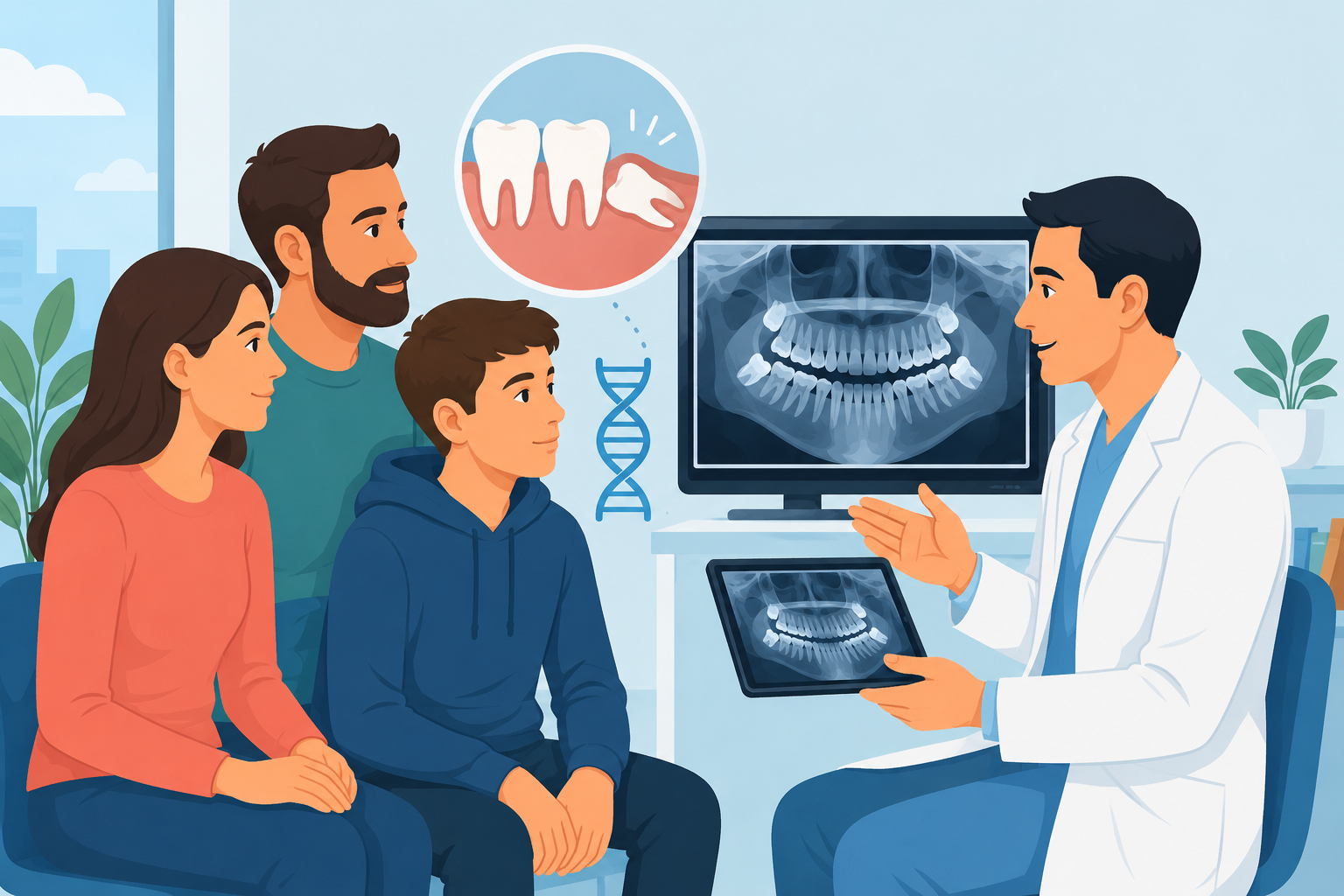
Many people are surprised to learn that wisdom teeth are often connected to genetics. Some individuals develop all four wisdom teeth without problems, while others never grow them at all. In some families, impacted wisdom teeth are extremely common, while in others, third molars rarely appear.
If you have ever wondered why wisdom teeth seem to “run in the family,” the answer is often tied to inherited jaw size, tooth development, and overall genetics. Understanding how genetics affect wisdom teeth can help patients recognize potential problems earlier and make informed decisions about oral health.
This guide explains how genetics influence wisdom teeth, why some people never develop them, what symptoms families should watch for, and when wisdom tooth removal may become necessary.
What Are Wisdom Teeth?
Wisdom teeth are the third set of molars located at the very back of the mouth. Most people who develop wisdom teeth usually have four:
- two upper wisdom teeth
- two lower wisdom teeth
These teeth generally emerge between the ages of 17 and 25, although timing varies from person to person.
For some individuals, wisdom teeth grow normally and never create issues. For many others, there simply is not enough space in the jaw for proper eruption.
That is where complications often begin.
Are Wisdom Teeth Really Genetic?
Yes, genetics play a major role in wisdom tooth development.
Traits inherited from parents can influence:
- whether wisdom teeth develop at all
- jaw size and shape
- tooth alignment
- eruption patterns
- likelihood of impaction
Families often share similar dental structures, which explains why wisdom tooth problems frequently appear across generations.
For example:
- parents with impacted wisdom teeth may have children with similar issues
- small jaw structures often run in families
- missing wisdom teeth can also be inherited
Genetics do not guarantee identical experiences, but they strongly affect the likelihood of certain wisdom tooth patterns.
Why Some People Never Develop Wisdom Teeth
One of the most interesting genetic variations involves people who never grow wisdom teeth at all.
Researchers believe this is partly related to human evolution and inherited genetic changes over time. As jaw sizes became smaller throughout generations, wisdom teeth gradually became less necessary for survival.
People exploring inherited dental development patterns sometimes become curious about missing molar when comparing family dental histories and wisdom tooth growth differences.
Today, it is increasingly common for people to:
- develop fewer than four wisdom teeth
- develop only one or two
- never develop wisdom teeth entirely
This variation is considered normal.
How Jaw Size Affects Wisdom Teeth
Jaw structure is one of the biggest inherited factors linked to wisdom tooth complications.
Smaller Jaws Create Less Space
Many people inherit relatively small jawbones while still developing full-sized teeth. When wisdom teeth begin emerging, there may not be enough room to accommodate them properly.
This can cause:
- impaction
- crowding
- gum irritation
- shifting teeth
- pain near the back molars
Larger Jaws May Reduce Problems
Individuals with wider jaw structures sometimes experience fewer wisdom tooth complications because there is adequate room for eruption.
Even so, larger jaws do not completely eliminate the possibility of infection or impaction.
What Is an Impacted Wisdom Tooth?
An impacted wisdom tooth is a tooth that cannot fully emerge through the gums due to lack of space or improper positioning.
Impaction levels vary from mild to severe.
Partial Impaction
Partially impacted teeth break through the gums only slightly. This creates pockets where bacteria and food debris collect.
Partial impaction commonly causes:
- swelling
- gum infections
- bad breath
- tenderness
Full Impaction
Fully impacted wisdom teeth remain trapped beneath the gums or jawbone.
Some fully impacted teeth remain symptom-free for years, while others create:
- pressure
- jaw pain
- cyst formation
- nearby tooth damage
Signs Wisdom Teeth May Be Causing Problems
Genetics may increase your risk, but symptoms often reveal when wisdom teeth are actively becoming problematic.
Jaw Pain or Pressure
One of the most common early signs is pressure or soreness near the back molars.
Pain may:
- come and go
- worsen while chewing
- radiate toward the ears or jaw
Swollen Gums
Inflamed gums near the wisdom teeth often indicate irritation or infection.
Crowded Teeth
Some patients notice shifting teeth or increased crowding as wisdom teeth begin developing.
Headaches or Facial Pain
Jaw tension from impacted teeth may contribute to headaches or facial discomfort.
Difficulty Opening the Mouth
More advanced inflammation can affect jaw mobility.
Why Early Wisdom Tooth Evaluation Matters
Because wisdom tooth patterns often run in families, many oral surgeons recommend early monitoring for teenagers and young adults.
Evaluating wisdom teeth before symptoms become severe may help:
- reduce complications
- simplify surgery
- improve healing
- prevent crowding
- lower infection risks
Early detection is especially important when parents already have a history of impacted wisdom teeth.
When Wisdom Tooth Removal Is Recommended
Not every wisdom tooth requires extraction. However, removal is often recommended when teeth are:
- impacted
- infected
- causing crowding
- damaging nearby teeth
- difficult to clean properly
Wisdom tooth removal is generally easier before roots fully mature.
What Happens During Wisdom Tooth Removal?
Many patients feel nervous before oral surgery, especially if family members previously described difficult experiences. Fortunately, modern oral surgery techniques are far more comfortable and predictable than many people expect.
Initial Consultation
The process usually begins with:
- oral examination
- digital X-rays
- jaw evaluation
- treatment planning
The surgeon determines whether removal is necessary and explains the procedure clearly.
Sedation Options
Sedation helps patients remain relaxed and comfortable throughout treatment.
Depending on the procedure, options may include:
- local anesthesia
- IV sedation
- general anesthesia
Extraction Procedure
During surgery, the oral surgeon carefully removes the wisdom teeth while minimizing trauma to surrounding tissue.
Some teeth require sectioning into smaller pieces for safer removal.
Recovery After Wisdom Tooth Surgery
Recovery experiences vary depending on:
- impaction severity
- age
- overall health
- surgical complexity
Most patients recover smoothly when following post-operative instructions carefully.
First Few Days
Swelling and mild discomfort are common during the initial recovery phase.
Patients are usually advised to:
- rest
- stay hydrated
- avoid strenuous activity
- eat soft foods
Dietary Considerations
Food choices play an important role during healing. Soft foods are usually safest immediately after surgery.
Patients recovering from oral surgery sometimes pay closer attention to healthy foods while adjusting their diet during the healing process.
Alcohol and Recovery
Alcohol consumption shortly after surgery may slow healing and increase complications.
Many patients become more cautious about recovery habits after learning how alcohol use can interfere with healing and medication safety.
Family History and Wisdom Tooth Risk
Family dental history can offer useful clues about potential wisdom tooth problems.
You may have a higher likelihood of complications if close relatives experienced:
- impacted wisdom teeth
- multiple extractions
- jaw crowding
- oral surgery complications
This does not guarantee identical outcomes, but it can help guide earlier monitoring and evaluations.
Wisdom Teeth and Evolution
Anthropologists and dental researchers believe wisdom teeth were once more useful for early humans.
Ancient diets included:
- tougher foods
- uncooked meats
- coarse plants
Larger jaws were better suited for extra molars.
As diets and lifestyles evolved, jaw sizes gradually became smaller while wisdom teeth remained genetically programmed in many individuals.
This mismatch is one reason wisdom tooth impaction is now so common.
Why Wisdom Tooth Problems Often Appear During Young Adulthood
Wisdom teeth usually emerge later than other permanent teeth.
By the late teen years:
- jaw growth slows
- existing teeth are fully developed
- available space becomes limited
This timing explains why many patients first notice symptoms between ages 17 and 25.
Choosing the Right Oral Surgeon in Miami
If wisdom teeth are causing pain, swelling, or crowding, choosing an experienced oral surgeon is important.
Patients often look for:
- advanced imaging technology
- sedation options
- surgical experience
- compassionate care
- strong recovery support
For patients seeking experienced oral surgery care, Miami wisdom specialists provide personalized treatment plans designed to improve comfort, safety, and long-term oral health outcomes.
Warning Signs After Wisdom Tooth Removal
Most patients heal normally after surgery, but monitoring symptoms remains important.
Parents helping teens recover from oral surgery sometimes become more aware of recovery complication signs that may require follow-up evaluation after wisdom tooth extraction.
Signs that should be monitored include:
- worsening pain
- excessive swelling
- fever
- persistent bleeding
- difficulty swallowing
Prompt follow-up care helps reduce the risk of complications.
Can Genetics Predict Wisdom Tooth Problems Exactly?
Not completely.
While genetics strongly influence wisdom tooth development, environmental and individual factors also matter.
Two siblings may still experience very different outcomes even with similar dental genetics.
Factors such as:
- oral hygiene
- jaw growth
- tooth positioning
- overall health
can all influence whether wisdom teeth eventually cause problems.
Final Thoughts on Genetic Wisdom Teeth Patterns
Wisdom teeth are strongly connected to genetics, especially when it comes to jaw size, tooth development, and eruption patterns. Family history can provide helpful insight into whether wisdom teeth may become impacted or require removal later.
Even though genetics influence wisdom tooth development, regular dental evaluations remain the best way to identify potential issues early. Monitoring symptoms and addressing problems before they worsen often leads to easier treatment and smoother recovery.
If you are experiencing jaw pain, swelling, crowding, or recurring wisdom tooth discomfort, scheduling an evaluation with an experienced oral surgeon can help you understand the best treatment options for your specific situation.
FAQ About Genetic Wisdom Teeth
Are wisdom teeth inherited from parents?
Genetics strongly influence wisdom tooth development, including jaw size, eruption patterns, and whether wisdom teeth develop at all.
Can wisdom teeth skip generations?
Yes. Some inherited dental traits may appear differently across generations.
Is it normal to never develop wisdom teeth?
Yes. Many people naturally develop fewer wisdom teeth or none at all due to genetic variation.
Why do wisdom teeth become impacted?
Impaction usually happens when there is not enough space in the jaw for proper eruption.
At what age do wisdom teeth usually appear?
Most wisdom teeth emerge between ages 17 and 25.
Should wisdom teeth always be removed?
Not always. Some wisdom teeth remain healthy and functional, while others require removal due to complications.
Can siblings have different wisdom tooth experiences?
Yes. Even within the same family, wisdom tooth growth and complications can vary significantly.
Can Diabetics Safely Undergo Oral Surgery?
January 6, 2026
Wisdom Teeth Headaches: Causes and Relief
February 24, 2026
Why Do We Have Wisdom Teeth? The Real Reason Behind Them
June 15, 2026
Signs You May Need a Deep Dental Cleaning
May 7, 2026
Can Wisdom Teeth Cause Ear Pain?
May 13, 2026