The Hidden Problems Wisdom Teeth Can Cause
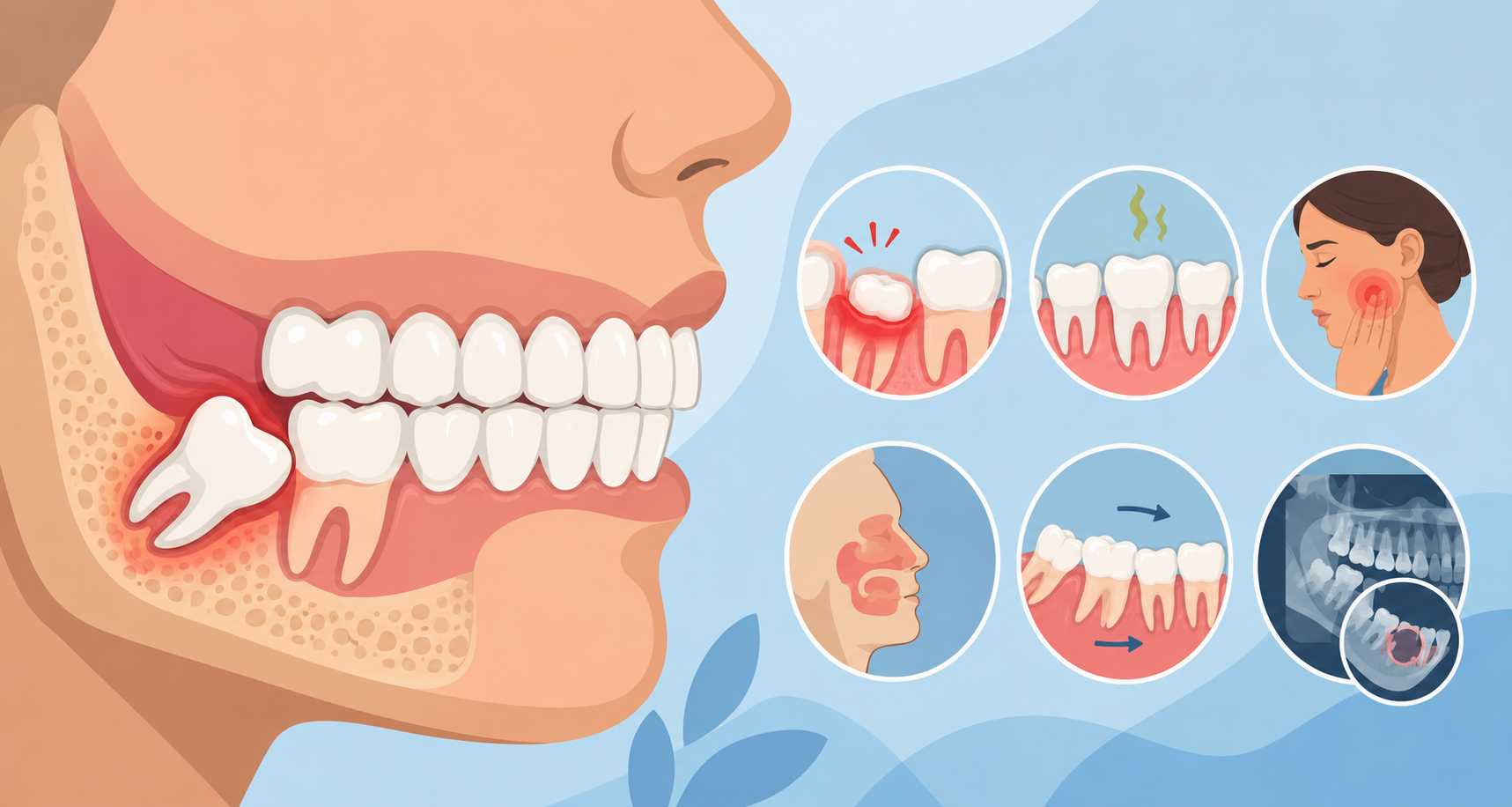
Wisdom teeth often seem harmless at first. Some people don’t even notice them coming in until pain suddenly appears months or years later. But even when wisdom teeth are not actively hurting, they can quietly create oral health problems that affect your gums, nearby teeth, jaw, and overall comfort.
Many patients assume wisdom teeth only become an issue once severe pain begins. In reality, these third molars can lead to hidden complications long before obvious symptoms appear. From infections and crowding to sinus pressure and recurring inflammation, untreated wisdom teeth may cause problems that gradually worsen over time.
Understanding these hidden risks can help you recognize early warning signs and avoid more complicated dental issues later on.
Why Wisdom Teeth Often Become Problematic
Wisdom teeth are the last molars to erupt, usually appearing between the late teens and early 30s. The problem is that most people simply do not have enough room in the jaw for these additional teeth.
When there isn’t enough space, wisdom teeth may:
- Grow sideways
- Become trapped under the gums
- Push against nearby teeth
- Partially erupt
- Remain impacted beneath the bone
These situations create conditions where bacteria, inflammation, and pressure can develop without immediately being noticed.
Hidden Infection Risks Around Wisdom Teeth
One of the most common hidden issues involves infection around partially erupted wisdom teeth.
Bacteria Easily Get Trapped
When wisdom teeth only partially break through the gums, they create small pockets where food particles and bacteria collect. These areas are difficult to clean properly with normal brushing and flossing.
Over time, this buildup can lead to:
- Gum swelling
- Tenderness
- Persistent bad breath
- Jaw discomfort
- Infection
Patients sometimes dismiss mild symptoms until the infection becomes severe. In many cases, the problem starts quietly and gradually worsens.
If you notice swelling, drainage, or ongoing soreness near the back of your mouth, it may be similar to the warning signs if your wisdom tooth is infected.
Infections Can Spread
Untreated wisdom tooth infections do not always stay localized. Bacteria can spread into surrounding gum tissue, nearby teeth, and deeper areas of the jaw.
In more advanced cases, patients may experience:
- Facial swelling
- Difficulty opening the mouth
- Pain while swallowing
- Fever
- Swollen lymph nodes
This is one reason oral surgeons often recommend monitoring wisdom teeth even before major symptoms appear.
Wisdom Teeth Can Damage Nearby Teeth
Many people are surprised to learn that wisdom teeth can harm otherwise healthy neighboring molars.
Pressure Against Adjacent Teeth
Impacted wisdom teeth often grow at an angle and press against the second molars directly beside them. This constant pressure may damage tooth roots, weaken enamel, or contribute to alignment issues.
In some situations, patients experience:
- Tooth sensitivity
- Pain while chewing
- Gum inflammation between teeth
- Increased cavity risk
Since the back of the mouth is harder to clean, bacteria can also spread between crowded molars more easily.
Hidden Decay Between Teeth
One of the more overlooked complications is decay forming between the wisdom tooth and neighboring molar.
Because these areas are difficult to reach, cavities may develop unnoticed until significant damage occurs. Some patients only discover the issue after X-rays reveal decay affecting both teeth.
At that stage, treatment can become more extensive than simple wisdom tooth removal alone.
Jaw Pain and Chronic Pressure
Wisdom teeth can also create lingering jaw discomfort that patients often mistake for unrelated dental issues.
Tension in the Jaw
Impacted teeth place pressure on surrounding structures inside the jawbone. This pressure may contribute to:
- Jaw stiffness
- Soreness near the ear
- Facial tension
- Difficulty chewing comfortably
The discomfort is not always sharp. Many patients describe it as dull pressure that comes and goes for months.
Nighttime Pain Often Gets Worse
A common complaint among patients is that wisdom tooth pain intensifies at night. This happens because blood flow changes while lying down can increase inflammation and pressure around irritated tissues.
People dealing with recurring nighttime discomfort often experience symptoms similar to tooth pain gets worse at night.
Ignoring recurring nighttime pain may allow hidden inflammation to continue progressing beneath the gums.
Wisdom Teeth and Gum Disease
Wisdom teeth can quietly contribute to gum disease, especially when they are difficult to clean.
Hard-to-Reach Areas Encourage Plaque Buildup
The far back corners of the mouth are already challenging to maintain. When wisdom teeth erupt improperly, brushing and flossing become even more difficult.
This allows plaque and bacteria to accumulate near the gumline, increasing the risk of:
- Gingivitis
- Gum pockets
- Bleeding gums
- Chronic inflammation
Over time, gum disease can spread beyond the wisdom teeth themselves.
Persistent Inflammation Can Affect Oral Health
Even mild, ongoing inflammation can weaken gum tissue surrounding nearby teeth. Some patients experience recurring swelling for years without realizing wisdom teeth are contributing to the problem.
This chronic irritation may eventually affect overall dental stability and oral hygiene.
Sinus Pressure and Headaches
Upper wisdom teeth sometimes develop close to the sinus cavities. When these teeth become impacted or inflamed, pressure may radiate into surrounding areas.
Unexpected Facial Symptoms
Patients occasionally report:
- Sinus pressure
- Headaches
- Facial pain
- Ear discomfort
- Pressure behind the cheeks
Because these symptoms overlap with sinus infections or tension headaches, wisdom teeth are not always suspected immediately.
Dental imaging often reveals the real source of the discomfort.
Wisdom Teeth Can Shift Other Teeth
There is still debate about how much wisdom teeth directly cause crowding, but they can contribute to pressure inside the mouth.
Orthodontic Concerns
Patients who previously had braces sometimes worry about shifting teeth as wisdom teeth emerge.
While wisdom teeth are not always the sole cause of movement, impacted molars can increase pressure in already crowded areas.
This is especially concerning when:
- Teeth are tightly spaced
- Wisdom teeth erupt sideways
- The jaw has limited room
Monitoring developing wisdom teeth early can help reduce long-term complications.
Cysts and Hidden Bone Damage
One of the more serious hidden problems involves cyst formation around impacted wisdom teeth.
What Are Dental Cysts?
A cyst is a fluid-filled sac that may develop around an unerupted tooth beneath the gums or bone.
Although uncommon, cysts can:
- Damage jawbone tissue
- Affect nearby tooth roots
- Expand silently over time
- Require surgical treatment
Since cysts often develop without pain initially, dental X-rays play an important role in detecting them early.
Delaying Treatment Can Make Removal More Difficult
Many patients postpone wisdom tooth evaluation because they are not currently experiencing severe symptoms. Unfortunately, waiting too long can sometimes complicate future treatment.
Age Can Affect Recovery
As people get older:
- Tooth roots become more developed
- Bone becomes denser
- Healing may take longer
- Surgical removal may become more complex
Some individuals delay treatment for years until recurring infections or pain force emergency removal.
Recovery Is Easier With Proper Aftercare
Wisdom tooth removal recovery is usually manageable when patients follow proper instructions.
Protecting the Healing Area
After surgery, the body forms blood clots to protect the extraction sites. Certain habits can interfere with healing and increase complications.
For example, smoking can significantly slow recovery by reducing blood flow and irritating healing tissues.
Following aftercare instructions carefully helps minimize swelling, discomfort, and healing delays.
When Wisdom Teeth Should Be Evaluated
Not every wisdom tooth requires immediate removal. However, regular evaluation is important because many problems remain hidden beneath the gums.
You should consider an evaluation if you experience:
- Recurring pain
- Swelling near the back teeth
- Jaw pressure
- Gum irritation
- Difficulty chewing
- Frequent headaches
- Bad breath that doesn’t improve
- Repeated infections
Dental imaging allows oral surgeons to assess tooth position, surrounding structures, and potential future complications before symptoms worsen.
Why Early Monitoring Matters
The earlier wisdom teeth are evaluated, the easier it becomes to identify hidden problems before they escalate.
Many complications develop slowly and quietly over time. Patients often assume everything is fine simply because pain is mild or inconsistent.
Routine monitoring helps:
- Detect impacted teeth early
- Prevent infection
- Protect nearby molars
- Reduce surgical complexity
- Improve long-term oral health
Taking a proactive approach can prevent more serious issues later on.
Book a Wisdom Teeth Evaluation
If you’ve been dealing with jaw discomfort, swelling, pressure, or recurring wisdom tooth pain, a professional evaluation can help identify the underlying cause before complications worsen.
Book An Appointment
FAQ About Wisdom Teeth Problems
Can wisdom teeth cause problems without pain?
Yes. Many wisdom teeth issues develop silently. Infections, decay, cysts, and gum disease can progress before noticeable pain appears.
Do all impacted wisdom teeth need removal?
Not always. Some impacted teeth remain stable without causing issues. However, regular monitoring is important to detect changes early.
Why does wisdom tooth pain come and go?
Inflammation around wisdom teeth can fluctuate depending on pressure, infection, gum irritation, and trapped bacteria.
Can wisdom teeth affect nearby healthy teeth?
Yes. Impacted wisdom teeth may press against neighboring molars, increase cavity risk, or contribute to gum inflammation.
Is wisdom tooth removal harder for adults?
In many cases, yes. As roots fully develop and bone becomes denser with age, removal may become more complex.
How do I know if my wisdom tooth is infected?
Common signs include swelling, redness, bad taste, jaw pain, drainage, fever, and difficulty chewing comfortably.

Can You Smoke or Vape After Wisdom Tooth Removal?
December 1, 2025

When Can You Exercise After Tooth Removal?
January 23, 2026
Early Warning Signs of Poor Oral Health You Should Know
April 21, 2026
Long-Term Problems Caused by Retained Wisdom Teeth
June 22, 2026
Signs You Might Need a Root Canal
January 15, 2026