Single-Tooth vs. Full-Arch Dental Implants
Dental implants have become one of the most reliable and natural-looking ways to replace missing teeth. Whether you are missing a single tooth or an entire row, implant-based restorations can restore function, confidence, and long-term oral health. The question many patients face is whether single-tooth dental implants or full-arch dental implants are the better solution for their situation.
While both options rely on the same core implant technology, they differ significantly in scope, complexity, recovery, and overall investment. Understanding these differences makes it easier to choose a treatment path that aligns with your oral health needs and long-term goals.
How Dental Implants Work
Dental implants are small titanium posts placed into the jawbone to replace the root of a missing tooth. Once healed, the implant integrates with the bone and serves as a stable anchor for a crown, bridge, or full-arch restoration.
Modern implant planning relies on advanced diagnostics, similar to the technology used in **3D imaging** to map jaw anatomy with precision. This level of accuracy allows oral surgeons to place implants safely, efficiently, and in optimal positions for long-term success.
What Is a Single-Tooth Dental Implant?
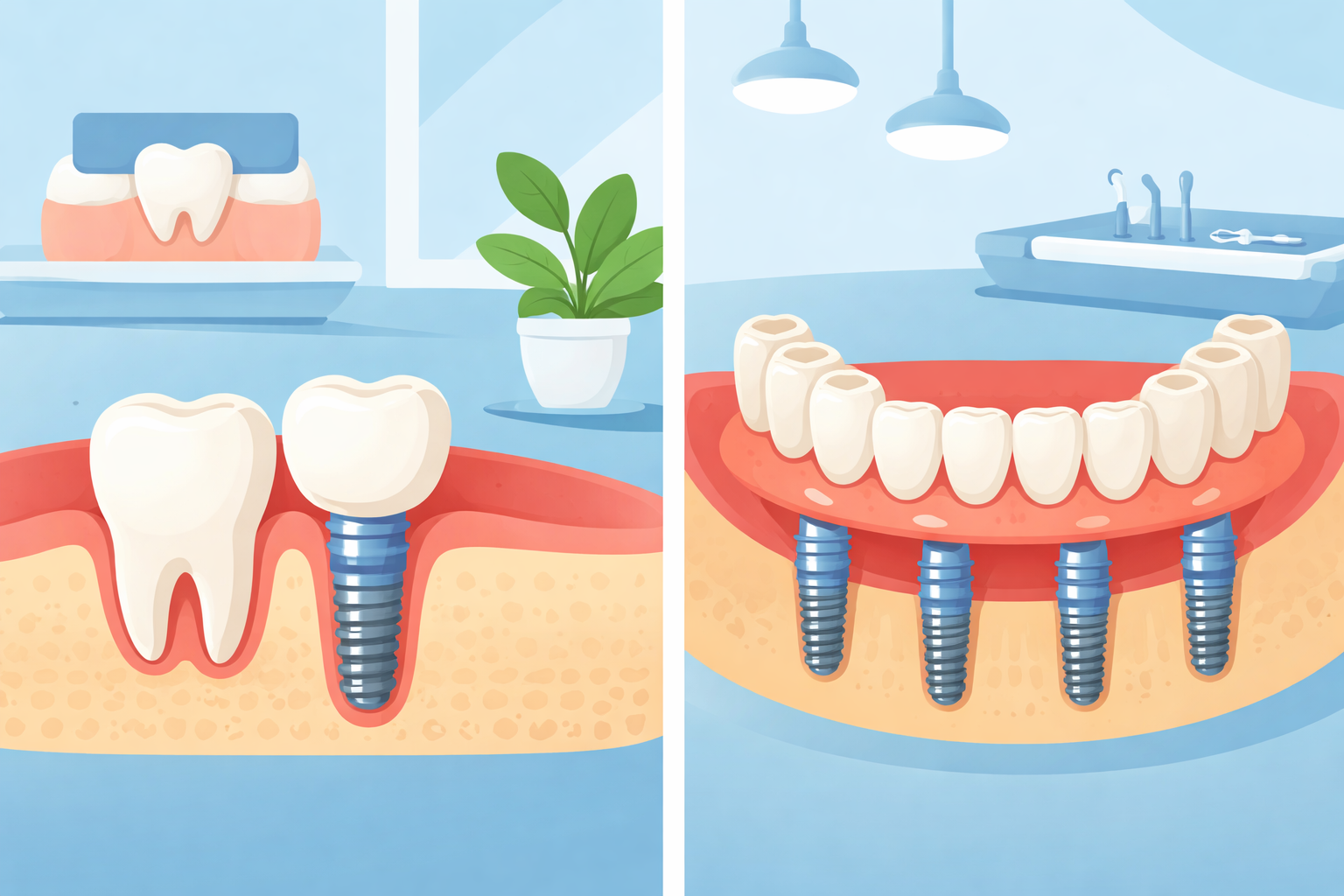
A single-tooth dental implant replaces one missing tooth without affecting surrounding teeth. It is one of the most conservative and durable tooth replacement options available.
How a Single-Tooth Implant Is Placed
The procedure involves placing a single implant into the jawbone, followed by a healing period during which the bone bonds to the implant. After integration, a custom-made crown is attached, restoring the tooth’s appearance and function.
Because the implant stands independently, it preserves the health of adjacent teeth and maintains natural spacing. This makes it a preferred option when neighboring teeth are healthy.
When a Single-Tooth Implant Is the Right Choice
Single-tooth implants are often ideal when:
- One tooth is missing due to decay, trauma, or extraction
- Adjacent teeth do not require treatment
- Jawbone density is adequate
After tooth removal, proper healing is essential. Care routines that help avoid problems following extraction play a direct role in ensuring implant success and long-term stability.
What Is a Full-Arch Dental Implant?
Full-arch dental implants are designed to replace an entire upper or lower set of teeth using a fixed prosthetic supported by multiple implants.
How Full-Arch Implants Are Structured
Rather than placing one implant per tooth, a full arch typically relies on four to six implants that support a complete row of teeth. This design distributes biting forces evenly and provides exceptional strength and stability.
In many cases, patients receive a temporary fixed restoration shortly after surgery, followed by a permanent prosthesis once healing is complete.
Who Full-Arch Implants Are Best Suited For
Full-arch implants are commonly recommended for individuals who:
- Have lost most or all teeth in one arch
- Are facing widespread tooth damage or failure
- Experience discomfort or instability with dentures
This approach offers a long-term alternative that closely mimics natural teeth in both appearance and function.
Key Differences Between Single-Tooth and Full-Arch Implants
Scope of Treatment
A single-tooth implant addresses a localized issue, while full-arch implants restore an entire section of the mouth. This difference affects everything from surgical planning to recovery time.
Surgical Complexity
Single-tooth implant procedures are typically straightforward and minimally invasive. Full-arch implant surgery is more complex, requiring advanced planning, precise implant angulation, and detailed imaging to maximize available bone.
Just as digital scans are critical for complex tooth planning, they are essential in full-arch cases to ensure predictable outcomes and long-term success.
Treatment Timeline
Single-tooth implants generally follow a staged timeline:
- Implant placement
- Healing and integration
- Crown attachment
Full-arch implants may allow for immediate temporary teeth, with the final restoration placed after healing.
Recovery and Healing Experience
Healing After a Single-Tooth Implant
Recovery is usually mild, with limited swelling and discomfort that subsides within a few days. Most patients resume normal activities quickly and experience minimal disruption.
Eating softer foods during the initial healing phase supports comfort and reduces strain on the surgical site.
Healing After Full-Arch Implant Surgery
Full-arch recovery is more involved due to the number of implants placed. Swelling and soreness may last longer, and dietary adjustments are more important during early healing.
Nutrition plays a key role in recovery. Many patients follow meal patterns similar to those recommended in post-surgery meals after oral procedures to support healing and maintain energy.
Cost and Long-Term Value
Single-Tooth Implant Investment
The cost of a single-tooth implant depends on factors such as:
- Crown materials
- Bone grafting needs
- Diagnostic imaging
Although the upfront cost may exceed that of traditional bridges, single-tooth implants often last decades, offering strong long-term value.
Full-Arch Implant Investment
Full-arch implants require a higher initial investment due to:
- Multiple implants
- Custom prosthetic fabrication
- Advanced surgical planning
However, they often eliminate recurring costs associated with denture repairs, replacements, and adhesives, making them a durable long-term solution.
Bone Health and Facial Structure
One of the most important advantages of dental implants is their ability to preserve jawbone health. When teeth are missing, the bone beneath them begins to deteriorate.
Single-tooth implants protect bone in a localized area, while full-arch implants preserve bone across the entire arch. This support helps maintain facial structure and prevents the sunken appearance commonly associated with tooth loss.
Appearance, Comfort, and Function
Natural Look and Feel
Single-tooth crowns are color-matched to blend seamlessly with surrounding teeth. Full-arch restorations are custom-designed to enhance facial proportions and create a balanced, natural-looking smile.
Bite Strength and Speech
Single-tooth implants restore normal chewing function. Full-arch implants dramatically improve bite strength compared to removable dentures and often improve speech clarity and overall comfort.
Maintenance and Oral Hygiene
Dental implants are maintained much like natural teeth:
- Daily brushing
- Routine flossing or water flossing
- Regular professional cleanings
Full-arch restorations may require specialized hygiene tools, but they remain fixed in place and do not need to be removed.
Choosing the Right Implant Option
The choice between single-tooth and full-arch dental implants depends on several factors, including the number of missing teeth, bone health, lifestyle preferences, and long-term goals.
Single-tooth implants offer a precise solution for isolated tooth loss, while full-arch implants provide a comprehensive restoration for extensive dental issues. A thorough evaluation ensures the chosen treatment aligns with both functional and aesthetic needs.
Final Takeaway
Both single-tooth and full-arch dental implants offer reliable, long-lasting solutions for tooth replacement. The right choice depends on the scope of tooth loss and the outcome you want to achieve.
With proper planning, advanced imaging, and attentive aftercare, dental implants can restore comfort, confidence, and oral health for years to come.
How Sugar Damages Teeth More Than You Think
May 12, 2026
Foods That Strengthen Teeth and What Harms Them
May 6, 2026

How Stress Affects Your Teeth and Jaw Health
April 21, 2026

Wisdom Teeth Surgery Under Sedation: What You Need to Know
May 21, 2025
Is Wisdom Tooth Removal Painful? Real Patient Guide
February 13, 2026