3D Imaging: Revolutionizing Wisdom Tooth Treatment Planning
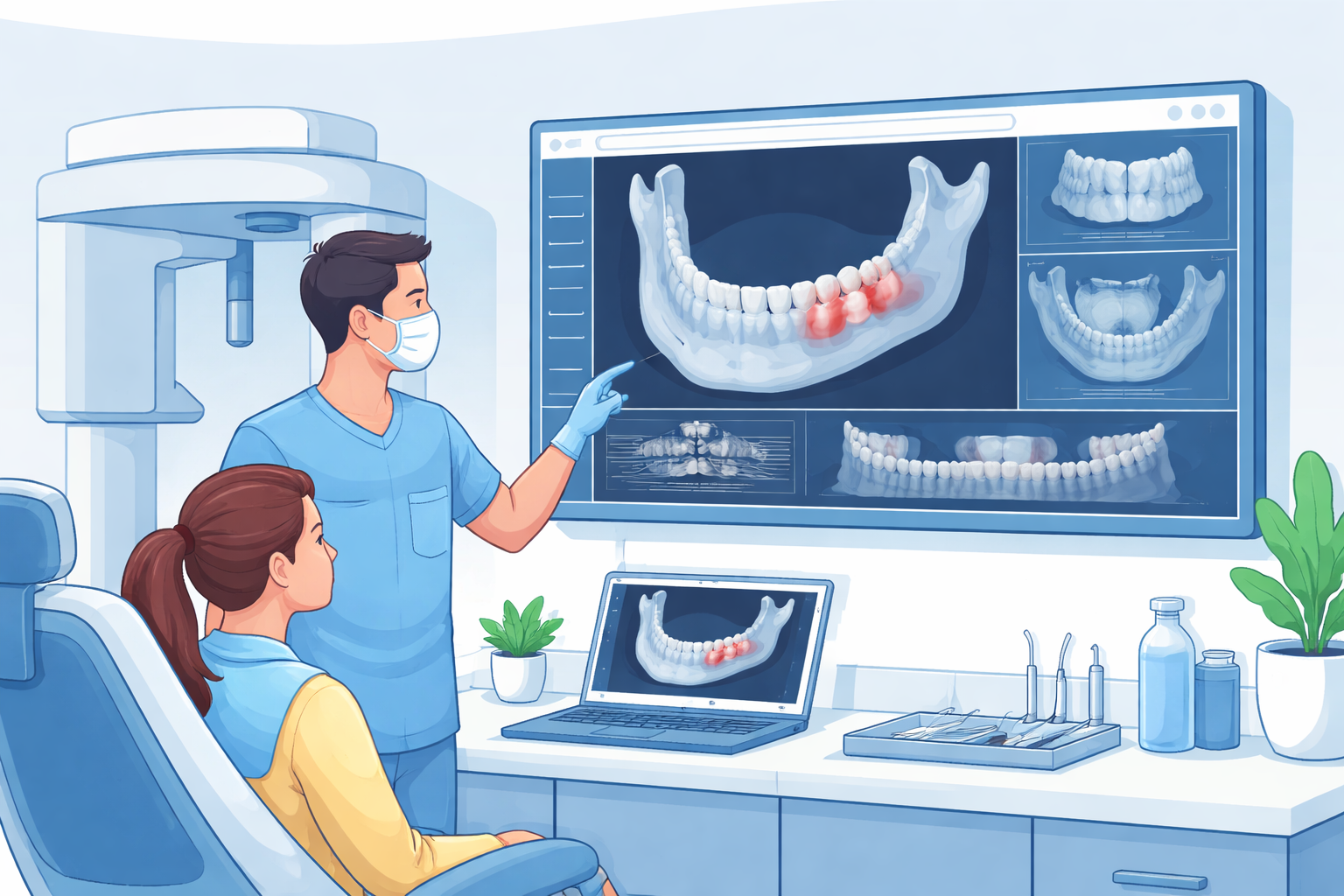
Wisdom teeth can be tricky. While some people experience no issues at all, others face pain, crowding, or infections that require careful management. Traditionally, dentists relied on standard X-rays to evaluate these third molars, but technology has advanced. Today, 3D imaging provides a clearer, more precise view, allowing oral surgeons to plan treatment with confidence and improve patient outcomes. In this post, we’ll explore how 3D imaging transforms wisdom tooth treatment planning, its benefits, and why it’s becoming the preferred choice for oral surgery specialists.
Understanding 3D Imaging in Dentistry
3D imaging, often referred to as cone beam computed tomography (CBCT), produces detailed three-dimensional scans of the jaw, teeth, and surrounding structures. Unlike traditional X-rays that show a flat image, 3D scans capture depth, angle, and exact positioning, which is critical when evaluating wisdom tooth complications. This technology enables surgeons to identify potential problems such as impacted teeth, proximity to nerves, or unusual root formation before performing any procedure.
With a detailed 3D scan, patients receive personalized care. Surgeons can virtually map out the extraction path, minimizing risks and making the procedure safer. For individuals worried about oral surgery, reviewing these scans provides reassurance and a better understanding of the planned approach. For tips on managing pre-surgery anxiety, check out our guide on mental preparation.
Benefits of 3D Imaging for Wisdom Tooth Planning
Accurate Assessment of Tooth Position
One of the key advantages of 3D imaging is its ability to reveal the precise position of wisdom teeth. Impacted teeth that are tilted, rotated, or trapped under the gum line can cause pain, swelling, or damage to neighboring molars. By identifying these positions early, oral surgeons can create a tailored extraction plan that avoids unnecessary complications. For patients experiencing discomfort, this can reduce the risk of future issues.
Reduced Surgical Risks
Traditional X-rays provide limited information about the relationship between wisdom teeth roots and nearby nerves. 3D imaging maps these structures in detail, allowing surgeons to avoid nerve injury, one of the most common complications in wisdom tooth extraction. This level of precision makes the procedure safer and recovery smoother.
Enhanced Communication with Patients
With 3D imaging, patients can see exactly what the surgeon sees. This improves communication, enabling patients to understand the complexity of their situation and the rationale behind the recommended treatment. Knowledge about potential challenges also helps patients set realistic expectations for recovery.
Identifying Rare Wisdom Tooth Complications
While most wisdom tooth extractions are straightforward, rare complications can occur. Advanced 3D imaging allows surgeons to detect anomalies such as cysts, unusual root shapes, or proximity to critical nerves. These scans can also reveal the risk of sinus involvement in upper wisdom teeth or jawbone abnormalities that could complicate surgery. Understanding the likelihood of these issues beforehand is essential.
Pre-Surgery Planning Made Easier
Custom Surgical Guides
Some practices use 3D scans to create surgical guides. These guides direct the surgeon during extraction, ensuring precise incisions and minimal disruption to surrounding tissue. By reducing guesswork, the surgery is faster and more predictable, ultimately lowering the chance of post-operative pain or swelling.
Planning for Multiple Extractions
When multiple wisdom teeth require removal, 3D imaging helps map the sequence and approach for each tooth. This careful planning ensures a smooth procedure and minimizes trauma to the jaw, which can shorten recovery time.
How 3D Imaging Impacts Recovery
By allowing for precise, minimally invasive procedures, 3D imaging contributes to faster and more comfortable recovery. Surgeons can avoid unnecessary cuts, reduce trauma to surrounding tissue, and plan post-operative care with a clearer understanding of the surgical site. This translates into less swelling, less pain, and a lower risk of complications like dry socket or prolonged bleeding.
Additionally, when patients have a clear visual of the procedure, they are more likely to follow aftercare instructions accurately, which improves healing outcomes. The combination of advanced imaging and informed patient compliance is a game-changer for oral health.
When to Consider 3D Imaging
3D imaging is not always necessary for every patient, but it is highly recommended in certain scenarios:
- Suspected impaction or rotated wisdom teeth
- Previous complications in dental history
- Complex root structures or nerve proximity
- Planning multiple extractions
- Patients with sinus or jawbone concerns
For most adults experiencing discomfort or swelling around wisdom teeth, consulting a specialist for a 3D scan can prevent potential problems and make the treatment process smoother.
The Future of Wisdom Tooth Management
3D imaging represents a significant leap forward in oral surgery. As technology evolves, we can expect even more precise imaging and better integration with digital planning tools. This could include AI-assisted analysis, enhanced virtual simulations, and improved patient education. By adopting 3D imaging, oral surgeons can offer safer, more effective, and patient-friendly care that anticipates complications rather than reacting to them.
Final Thoughts
Wisdom teeth are often underestimated in terms of the potential impact on oral health. Modern imaging technologies like 3D scans have changed the game by allowing precise evaluation, risk reduction, and personalized treatment planning. Whether you’re experiencing pain, swelling, or simply preparing for preventive extraction, understanding the role of 3D imaging can help you make informed decisions.
For anyone planning surgery, combining advanced imaging with proper preparation techniques, such as our tips on mental preparation, ensures a smoother experience. Likewise, being aware of rare complications or gum issues can improve post-operative outcomes, making the recovery process much more manageable.
What Dentists Don’t Tell You About Wisdom Tooth Surgery
June 10, 2026
Why Choose a Specialist for Impacted Wisdom Teeth?
June 26, 2026

Natural Ways to Improve Oral Health and Your Smile
April 27, 2026

Are Wisdom Teeth Genetic? What Families Should Know
May 11, 2026

Wisdom Tooth Removal During Pregnancy: Is It Safe?
December 9, 2025