Nerve Damage After Wisdom Tooth Removal: How Common?
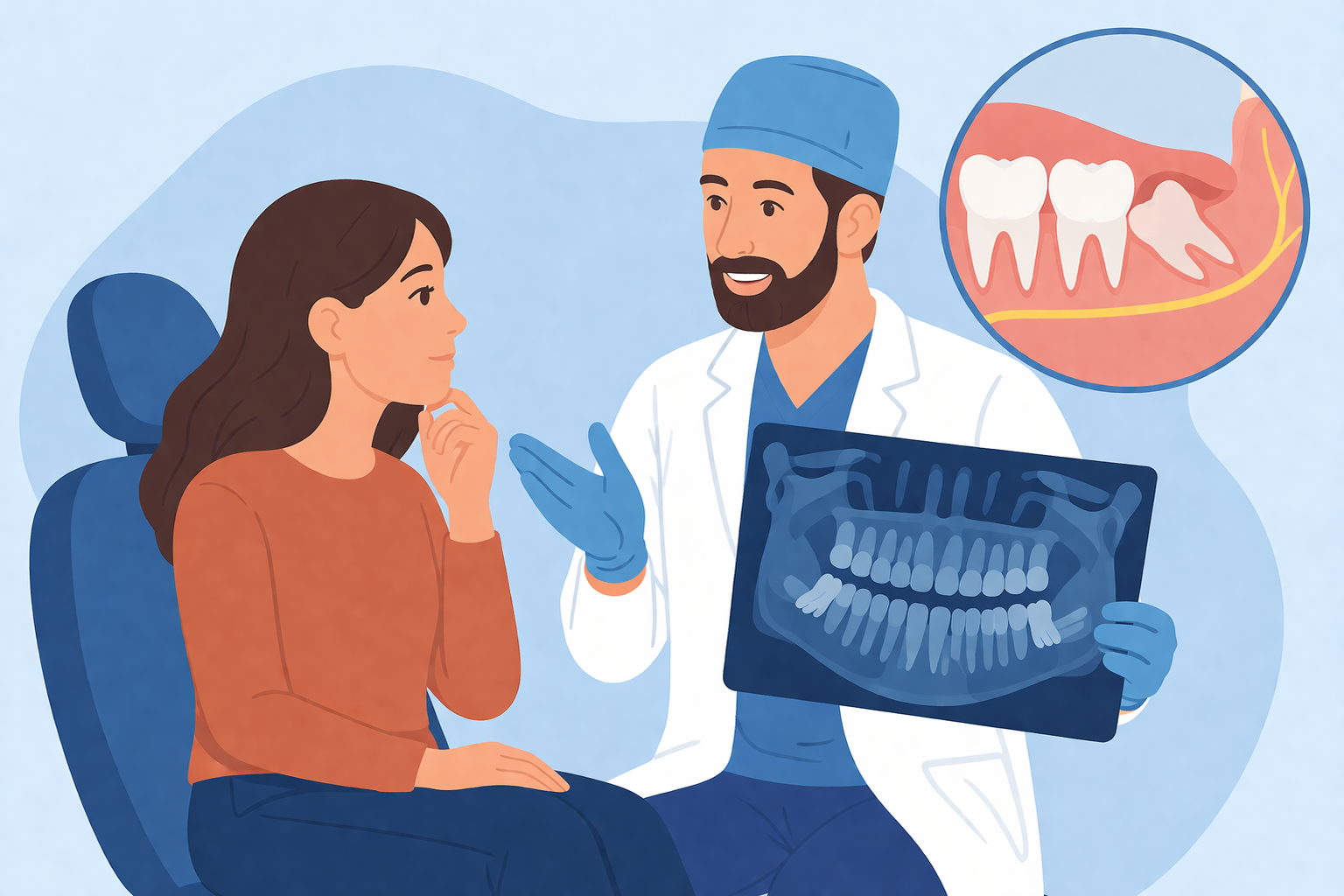
Wisdom tooth removal is one of the most common oral surgery procedures, yet many patients hesitate because of one specific concern—nerve damage. It’s a valid question. You’ve likely heard stories or read online forums that make the risk sound more common than it really is.
The truth is more reassuring. While nerve-related complications can happen, they are relatively rare, and in most cases, temporary. Understanding what causes nerve damage, how often it occurs, and what you can expect helps you make a confident, informed decision about your treatment.
In this guide, we’ll break everything down clearly so you know exactly what to expect.
What Is Nerve Damage in Wisdom Tooth Removal?
Nerve damage during wisdom tooth extraction refers to irritation or injury to nearby nerves that control sensation in your mouth, lips, chin, or tongue.
The Two Main Nerves Involved
Inferior Alveolar Nerve (IAN)
This nerve runs through your lower jaw and provides feeling to:
- Lower teeth
- Chin
- Lower lip
Lingual Nerve
This nerve affects:
- Tongue sensation
- Taste (in some cases)
- Inner gum area
Because lower wisdom teeth sit close to these nerves, they carry a slightly higher risk compared to upper wisdom teeth.
How Common Is Nerve Damage After Extraction?
This is the question most patients care about.
The short answer: it’s uncommon, and permanent damage is rare.
Typical Risk Rates
- Temporary nerve irritation: 0.5% to 5% of cases
- Permanent nerve damage: Less than 1%
Most patients who experience nerve-related symptoms recover within weeks or months.
Why It’s Often Overestimated
Online discussions tend to highlight worst-case scenarios. In reality:
- Oral surgeons use advanced imaging to assess nerve position
- Modern surgical techniques reduce risk significantly
- Experience plays a major role in safe outcomes
What Causes Nerve Damage During Wisdom Tooth Removal?
Nerve issues don’t happen randomly. They usually occur when the tooth is positioned very close to a nerve.
Common Risk Factors
Impacted Wisdom Teeth
Teeth trapped under the gums or bone are harder to remove and often closer to nerves.
Deep Root Placement
Roots that curve or extend near nerve canals increase complexity.
Age
Older patients tend to have denser bone and fully developed roots, which may raise risk slightly.
Surgical Difficulty
More complex extractions require additional manipulation, which can increase the chance of nerve irritation.
Symptoms of Nerve Damage to Watch For
After surgery, some numbness is completely normal due to anesthesia. However, certain symptoms may indicate nerve involvement.
Common Signs
- Tingling or “pins and needles” feeling
- Numbness in the lip, chin, or tongue
- Altered taste sensation
- Difficulty feeling temperature or texture
When Should You Be Concerned?
If numbness persists beyond:
- 24–48 hours (normal anesthesia window)
- Or doesn’t gradually improve over time
It’s important to follow up with your oral surgeon.
Temporary vs Permanent Nerve Damage
Understanding the difference is key to reducing anxiety.
Temporary Nerve Damage
This is far more common and typically includes:
- Mild numbness
- Tingling sensations
- Gradual return of normal feeling
Recovery timeline:
- A few days to several weeks
- Sometimes up to a few months
Permanent Nerve Damage
This is extremely rare. It may involve:
- Long-term numbness
- Reduced sensation
- Persistent altered feeling
Even in rare cases, symptoms may improve over time.
How Oral Surgeons Minimize the Risk
Modern oral surgery focuses heavily on prevention.
Pre-Surgery Planning
Surgeons often use advanced imaging like:
- Panoramic X-rays
- 3D scans (CBCT)
These help map the exact position of nerves relative to your teeth.
Surgical Techniques
Experienced surgeons may:
- Section the tooth into smaller pieces
- Remove bone carefully around the tooth
- Adjust approach based on nerve proximity
This precision significantly lowers the chance of complications.
Is Wisdom Tooth Removal Still Worth It?
For most patients, the benefits far outweigh the risks.
Risks of Not Removing Problematic Wisdom Teeth
- Chronic pain
- Infection
- Gum disease
- Damage to nearby teeth
- Cysts or jaw issues
If you’re already experiencing discomfort, it’s important to understand whether your symptoms are related to wisdom teeth or something else. This breakdown of wisdom tooth pain vs toothache can help clarify the difference.
Reducing Anxiety Before Your Procedure
Fear often comes from uncertainty. The more informed you are, the more comfortable you’ll feel.
Questions You Should Ask Your Surgeon
- How close are my wisdom teeth to the nerves?
- What imaging will be used?
- What is my personal risk level?
- What signs should I watch for after surgery?
If you feel nervous about the procedure, it helps to prepare mentally. Talking to your dentist about extraction anxiety can make the process easier.
What to Do If You Experience Nerve Symptoms
If you notice unusual numbness or tingling after your procedure:
Step-by-Step Action Plan
- Stay calm — most cases are temporary
- Monitor your symptoms daily
- Avoid irritating the area
- Contact your oral surgeon if symptoms persist
Early evaluation helps ensure proper management and peace of mind.
Choosing the Right Oral Surgeon Matters
One of the biggest factors in minimizing risk is experience.
A qualified oral surgeon will:
- Carefully evaluate your case
- Use proper imaging and planning
- Apply techniques tailored to your anatomy
Cost Considerations and Insurance
Many patients delay treatment due to cost concerns, but understanding your options can help.
Insurance coverage varies depending on:
- Medical necessity
- Type of procedure
- Your specific plan
If you’re exploring coverage for oral procedures, this overview of dental implant insurance coverage explained can give you a better idea of how dental insurance typically works.
Final Thoughts: Should You Be Worried?
Nerve damage after wisdom tooth removal is a possibility—but it’s not something most patients experience.
Key takeaways:
- Temporary nerve symptoms are uncommon but manageable
- Permanent nerve damage is very rare
- Proper planning and an experienced surgeon greatly reduce risks
Delaying necessary treatment often leads to bigger problems than the risks associated with removal.
When you understand the facts, the decision becomes much easier.
Single-Tooth vs. Full-Arch Dental Implants
January 7, 2026
How Untreated Dental Problems Can Turn Into Major Oral Surgery
January 26, 2026

Early vs. Late Wisdom Tooth Removal: Which Is Better?
January 7, 2026
How Bite Correction Surgery Fixes Overbite, Underbite, and Jaw Alignment
May 18, 2026

Nervous About Oral Surgery? Here's How to Prepare Mentally
June 11, 2026