Jaw Surgery Recovery Timeline: What Healing Really Looks Like
Jaw surgery can feel like a big step, but for many patients, it’s the key to better chewing, improved speech, balanced facial structure, and long-term oral health. Whether you’re having corrective jaw surgery for bite alignment, airway improvement, or facial balance, knowing what recovery looks like can make the process far less stressful.
This complete guide walks you through the jaw surgery recovery timeline in clear, realistic stages. You’ll learn what to expect after surgery, how long healing takes, what symptoms are normal, and how to support a smooth and comfortable recovery.
If you’re preparing for jaw surgery or supporting someone who is, this breakdown will help you feel confident, prepared, and in control.
What Is Jaw Surgery?
Jaw surgery, also called orthognathic surgery, corrects misaligned jaws and bite problems that can’t be fixed with braces alone. It is performed by an oral and maxillofacial surgeon and may involve repositioning the upper jaw, lower jaw, or both.
Jaw surgery is commonly recommended for:
- Severe overbites or underbites
- Crossbites or open bites
- Facial asymmetry
- Jaw pain and TMJ issues
- Breathing problems and sleep apnea
- Difficulty chewing or speaking
Many patients undergo jaw surgery as part of a comprehensive treatment plan that includes orthodontics and long-term dental care.
How Long Does Jaw Surgery Recovery Take?
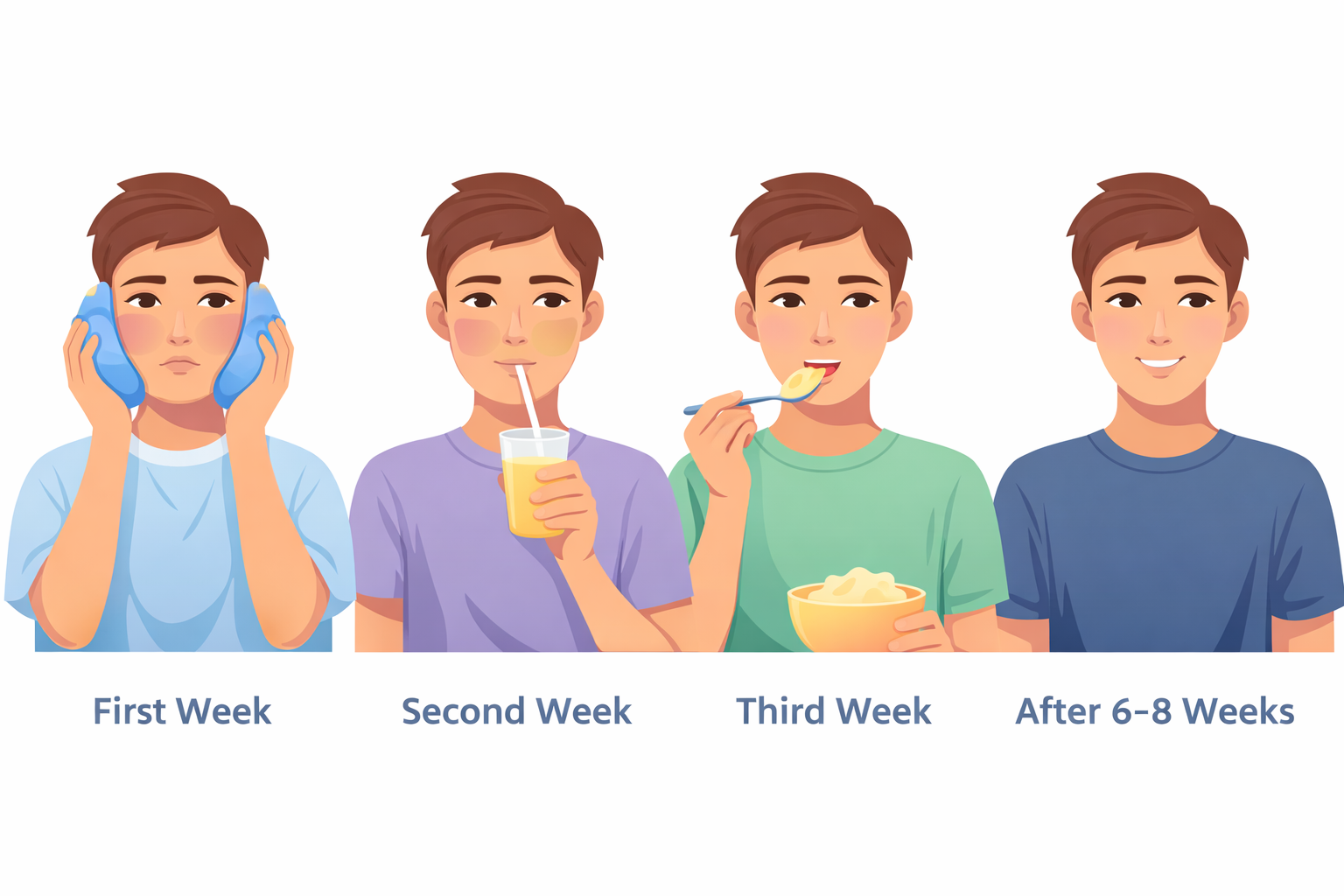
Jaw surgery recovery happens in stages. While initial healing takes about six weeks, full bone healing and final results can take several months.
Most patients experience:
- 2 weeks of rest and limited activity
- 6 weeks of soft and liquid foods
- 3 months of bone stabilization
- 6 to 12 months for complete healing
Each patient heals differently, but following your surgeon’s instructions closely will significantly improve comfort and recovery speed.
Preparing for Jaw Surgery
Before surgery, your care team will review your health history, medications, and imaging. Many jaw surgeries are performed under general anesthesia, which means you’ll be fully asleep during the procedure.
Understanding how surgeons safely put patients to sleep during oral procedures can ease anxiety about surgery day.
You’ll also receive instructions on:
- When to stop eating before surgery
- Which medications to avoid
- What to bring to the hospital
- How to prepare your home for recovery
Having soft foods, ice packs, and prescribed medications ready in advance will make the first few days much easier.
Jaw Surgery Recovery Timeline
Day 1 to Day 3: The Immediate Recovery Phase
This is when swelling, tightness, and fatigue are at their peak. Most patients stay in the hospital for one night and return home the next day.
What You May Experience
- Significant facial swelling
- Bruising around the jaw and neck
- Jaw stiffness and soreness
- Nasal congestion
- Mild bleeding
- Limited jaw movement
Your jaw may be stabilized with elastics or temporary wiring, depending on the procedure.
Pain and Comfort
Pain is usually moderate and well-controlled with prescription medication for the first few days. Ice packs help reduce swelling and discomfort.
Modern oral surgery techniques are designed to minimize trauma and speed healing, making recovery more comfortable than many patients expect.
Week 1: Rest, Swelling, and Nutrition
By the end of the first week, swelling typically peaks and then slowly begins to decrease.
What’s Normal This Week
- Puffy cheeks and jaw
- Bruising that may extend down the neck
- Tight jaw muscles
- Difficulty speaking clearly
- Low energy levels
You’ll need to rest and avoid strenuous activity.
Diet During Week 1
Your diet will consist entirely of liquids such as:
- Smoothies
- Protein shakes
- Broths
- Blended soups
- Meal replacement drinks
Staying well-nourished is critical for healing. Protein and hydration help your body repair tissue and reduce inflammation.
Week 2: Swelling Starts to Improve
During the second week, swelling slowly decreases, and most patients begin feeling more like themselves again.
What Improves
- Facial swelling starts to go down
- Bruising fades to yellow and light green
- Pain decreases significantly
- Energy levels increase
You may still feel stiffness in your jaw and cheeks, but it becomes more manageable each day.
Oral Hygiene
Keeping your mouth clean is essential for preventing infection. Your surgeon may recommend gentle rinsing and special oral care techniques.
Some patients transition to a gentle antibacterial mouthwash rinse during this phase, similar to what is used after wisdom tooth procedures.
Weeks 3 to 4: Regaining Strength and Mobility
This phase marks the transition from early recovery to functional healing.
What You’ll Notice
- Significant reduction in swelling
- Improved jaw movement
- Better speech clarity
- Reduced need for pain medication
Your surgeon may adjust or remove elastics depending on your progress.
Diet Progression
You may begin eating soft foods such as:
- Mashed potatoes
- Scrambled eggs
- Yogurt
- Oatmeal
- Soft pasta
Chewing is still limited, but many patients feel encouraged by this stage of recovery.
Weeks 5 to 6: Returning to Normal Routine
Most patients return to work or school by week 4 or 5, depending on their job and comfort level.
What Life Looks Like Now
- Minimal swelling remains
- Jaw mobility continues to improve
- Pain is mild or gone
- Energy levels are nearly normal
Your surgeon may allow light exercise and normal daily activities.
At this point, many patients feel the hardest part is behind them.
Months 2 to 3: Bone Stabilization Phase
Your jawbones are still healing internally, even if you feel mostly normal.
During This Phase
- Bone fusion strengthens
- Bite alignment stabilizes
- Jaw muscles regain strength
- Facial balance becomes more noticeable
You may continue orthodontic treatment during this stage if braces are part of your care plan.
This phase is especially important for patients who underwent corrective bite surgery, where precise alignment is critical for long-term success.
Months 4 to 12: Final Healing and Refinement
Full bone healing takes time. Subtle changes in facial appearance continue as swelling completely resolves and tissues settle.
By one year post-op, most patients experience:
- Fully stabilized jaw structure
- Final facial balance
- Normal chewing and speech
- Long-term comfort
Your surgeon will continue monitoring your progress during follow-up visits.
Common Jaw Surgery Recovery Questions
Is Jaw Surgery Recovery Painful?
Most patients describe jaw surgery recovery as uncomfortable rather than painful. The first few days are the most intense, but modern pain management makes the process manageable.
After the first week, pain typically decreases significantly.
How Long Will My Jaw Be Wired Shut?
Not all patients require wiring. Many surgeons now use elastic bands that allow some movement while still stabilizing the jaw.
If wiring is needed, it usually lasts 1 to 2 weeks.
When Can I Go Back to Work?
Most patients return to desk jobs within 3 to 4 weeks. Physically demanding jobs may require 6 to 8 weeks.
When Can I Exercise Again?
Light walking can begin after two weeks. Full workouts usually resume after 6 to 8 weeks with surgeon approval.
Recovery Tips for Faster Healing
- Sleep with your head elevated
- Apply ice for the first 72 hours
- Stay hydrated
- Eat high-protein foods
- Follow oral hygiene instructions carefully
- Avoid smoking and alcohol
- Attend all follow-up appointments
Healing is faster when your body is well-fueled and well-rested.
Jaw Surgery Recovery for Older Adults
Age does not prevent successful jaw surgery, but recovery may require extra care and planning.
Many older patients undergo oral surgery safely and comfortably with personalized treatment planning.
With proper medical coordination, jaw surgery can dramatically improve quality of life at any age.
Emotional Recovery Is Part of Healing Too
It’s normal to feel emotional during recovery. Swelling can temporarily change your appearance, and eating restrictions can feel frustrating.
Most patients report a significant boost in confidence once healing is complete and results are visible.
Support from family, friends, and your care team makes the journey easier.
Final Thoughts: Is Jaw Surgery Worth It?
Jaw surgery is a major procedure, but for most patients, the benefits far outweigh the temporary discomfort.
Improved bite function, facial balance, airway health, and long-term comfort make the recovery process a worthwhile investment in your future health.
With the right preparation, realistic expectations, and good aftercare, jaw surgery recovery becomes a manageable and empowering experience.
Signs It’s Time to Remove Your Third Molars
April 25, 2026

Wisdom Teeth Removal? Here’s Exactly What You Should Eat (Recovery Guide)
April 15, 2026
Wisdom Teeth Problems That May Lead to Serious Cysts
May 19, 2026

Speed Up Your Wisdom Teeth Recovery with These Practical Tips
June 8, 2026
Why Your Tooth Hurts When You Bite Down
April 17, 2026