Plaque vs. Tartar: What’s the Difference?
Maintaining good oral health starts with understanding what’s happening inside your mouth every day. Two of the most commonly confused dental terms are plaque and tartar. While they are closely related, they are not the same—and confusing them can lead to underestimated risks for cavities, gum disease, and long-term dental issues.
This guide clearly explains the difference between plaque and tartar, how each forms, why they matter, and what you can do to prevent them from damaging your teeth and gums.
What Is Plaque?
Plaque is a soft, sticky film of bacteria that constantly forms on your teeth. It develops when bacteria in your mouth mix with food particles and sugars, especially after eating or drinking anything other than water.
How Plaque Forms
Plaque begins forming within minutes after you eat. Bacteria feed on sugars and starches, producing acids that attack tooth enamel. Without regular brushing and flossing, plaque builds up along the gumline and between teeth.
Why Plaque Is Harmful
Plaque may be invisible, but its effects are not. If left untreated, plaque can:
- Weaken tooth enamel and cause cavities
- Irritate gums, leading to gingivitis
- Create an environment where more harmful bacteria thrive
- Trigger bad breath that persists despite mouthwash
Because plaque is soft, it can be removed at home with proper daily oral hygiene.
What Is Tartar?
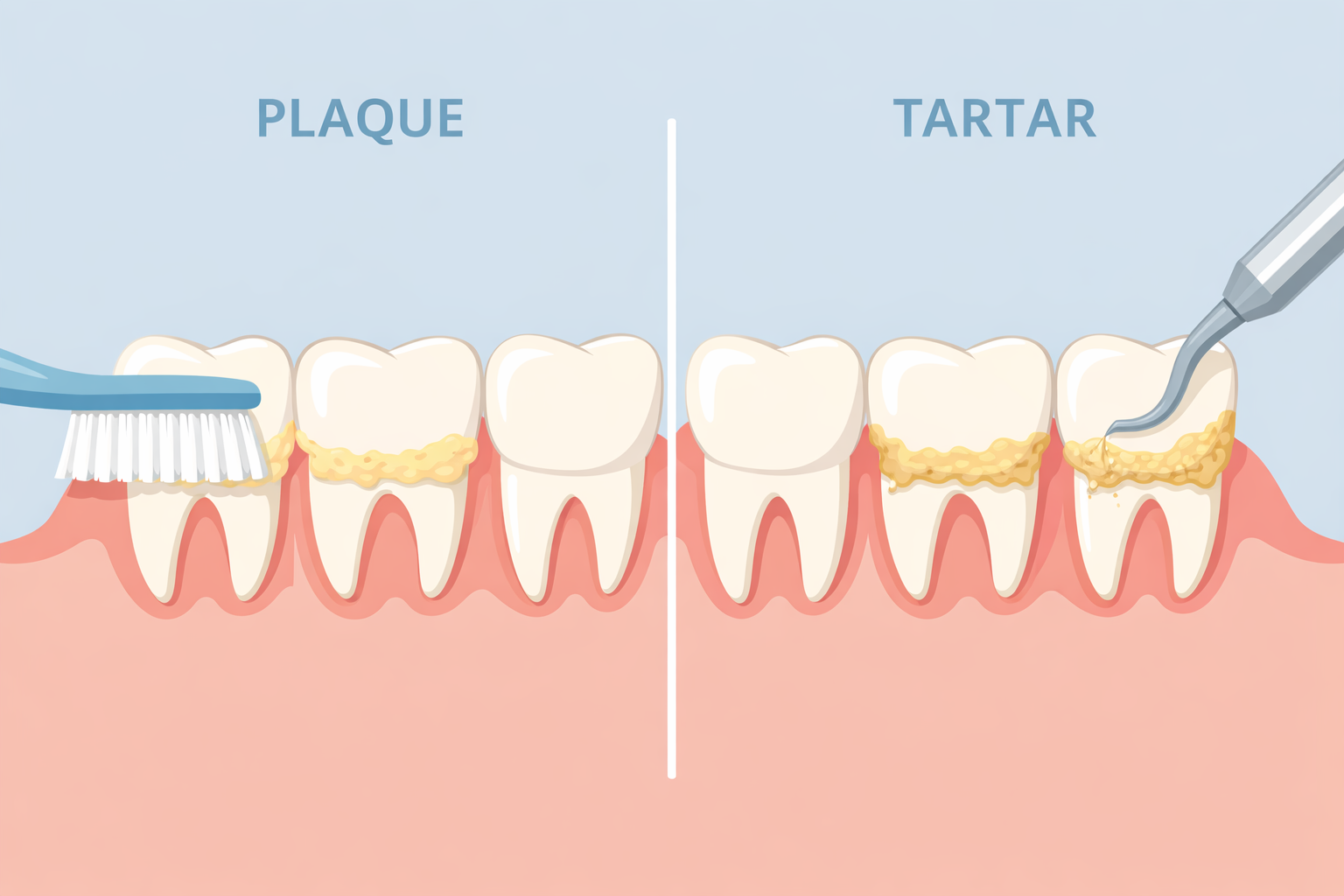
Tartar, also known as calculus, is plaque that has hardened due to mineral deposits in saliva. Once plaque turns into tartar, it can no longer be removed with brushing or flossing alone.
How Tartar Develops
If plaque remains on teeth for 24–72 hours, minerals in saliva cause it to harden. Tartar forms most commonly:
- Along the gumline
- Behind lower front teeth
- On the back molars
Once hardened, tartar creates a rough surface that attracts even more plaque, accelerating dental problems.
Why Tartar Is More Dangerous
Tartar significantly increases the risk of advanced oral health issues, including:
- Chronic gum inflammation
- Periodontal (gum) disease
- Gum recession
- Tooth loss if untreated
Only a professional dental cleaning can safely remove tartar.
Plaque vs. Tartar: Key Differences at a Glance
Texture and Appearance
- Plaque: Soft, sticky, often colorless
- Tartar: Hard, crusty, yellow or brown
Removal
- Plaque: Removable with brushing and flossing
- Tartar: Requires professional dental tools
Impact on Oral Health
- Plaque: Causes cavities and early gum disease
- Tartar: Leads to advanced gum disease and structural damage
Understanding this progression is critical—plaque is the starting point, tartar is the escalation.
How Plaque and Tartar Affect Your Gums
When plaque and tartar accumulate near the gumline, they trigger inflammation. This is often the first sign of gum disease.
Early Stage: Gingivitis
- Red, swollen gums
- Bleeding during brushing or flossing
- Mild discomfort
Gingivitis is reversible with improved oral hygiene and professional care.
Advanced Stage: Periodontitis
If tartar remains untreated, gum disease can progress to periodontitis, which may cause:
- Gum recession
- Bone loss around teeth
- Loose or shifting teeth
At this stage, damage is often permanent and requires specialized dental treatment.
Can You See or Feel Plaque and Tartar?
Plaque is not always visible, but you may feel a fuzzy or slippery sensation on your teeth. Tartar, on the other hand, often feels rough or gritty and may be visible as yellow or brown deposits near the gums.
Bad breath that does not improve with brushing can also indicate plaque buildup or tartar formation.
How to Prevent Plaque From Turning Into Tartar
Prevention focuses on stopping plaque before it hardens.
Daily Oral Hygiene Essentials
- Brush twice daily with fluoride toothpaste
- Floss once per day to remove plaque between teeth
- Use a soft-bristled toothbrush to protect enamel and gums
Professional Dental Care
- Schedule regular dental cleanings every six months
- Address early gum inflammation promptly
- Follow dentist recommendations for deep cleaning if needed
Consistency is the most effective defense against tartar buildup.
Common Myths About Plaque and Tartar
“If I Brush Harder, I Can Remove Tartar”
This is false. Brushing harder can damage enamel and gums but will not remove tartar.
“Mouthwash Can Replace Brushing”
Mouthwash supports oral hygiene but cannot remove plaque on its own.
“Tartar Only Affects Older Adults”
Tartar can form at any age if plaque is not removed consistently.
Why Understanding the Difference Matters
Knowing the difference between plaque and tartar empowers you to take action early. Plaque is manageable at home. Tartar is not. The sooner plaque is removed, the lower the risk of long-term dental complications, discomfort, and costly treatments.
Oral health is cumulative—small daily habits determine long-term outcomes.
Final Thoughts
Plaque and tartar are part of a continuous process that affects everyone. The key difference is control. Plaque is preventable and removable. Tartar is not. By maintaining proper oral hygiene and seeing your dentist regularly, you can stop plaque before it becomes a more serious problem.
If you notice persistent gum irritation, bad breath, or rough buildup on your teeth, it may be time for a professional evaluation.
Warning Signs of a Serious Wisdom Tooth Infection You Shouldn’t Ignore
December 22, 2025

Are Cavities Contagious? What You Need to Know
February 2, 2026
Foods That Strengthen Teeth and What Harms Them
May 6, 2026

How to Sleep After Wisdom Tooth Surgery Fast
February 25, 2026

Does Dental Insurance Cover Oral Surgery?
January 9, 2026