How Many Wisdom Teeth Do Most People Actually Have?
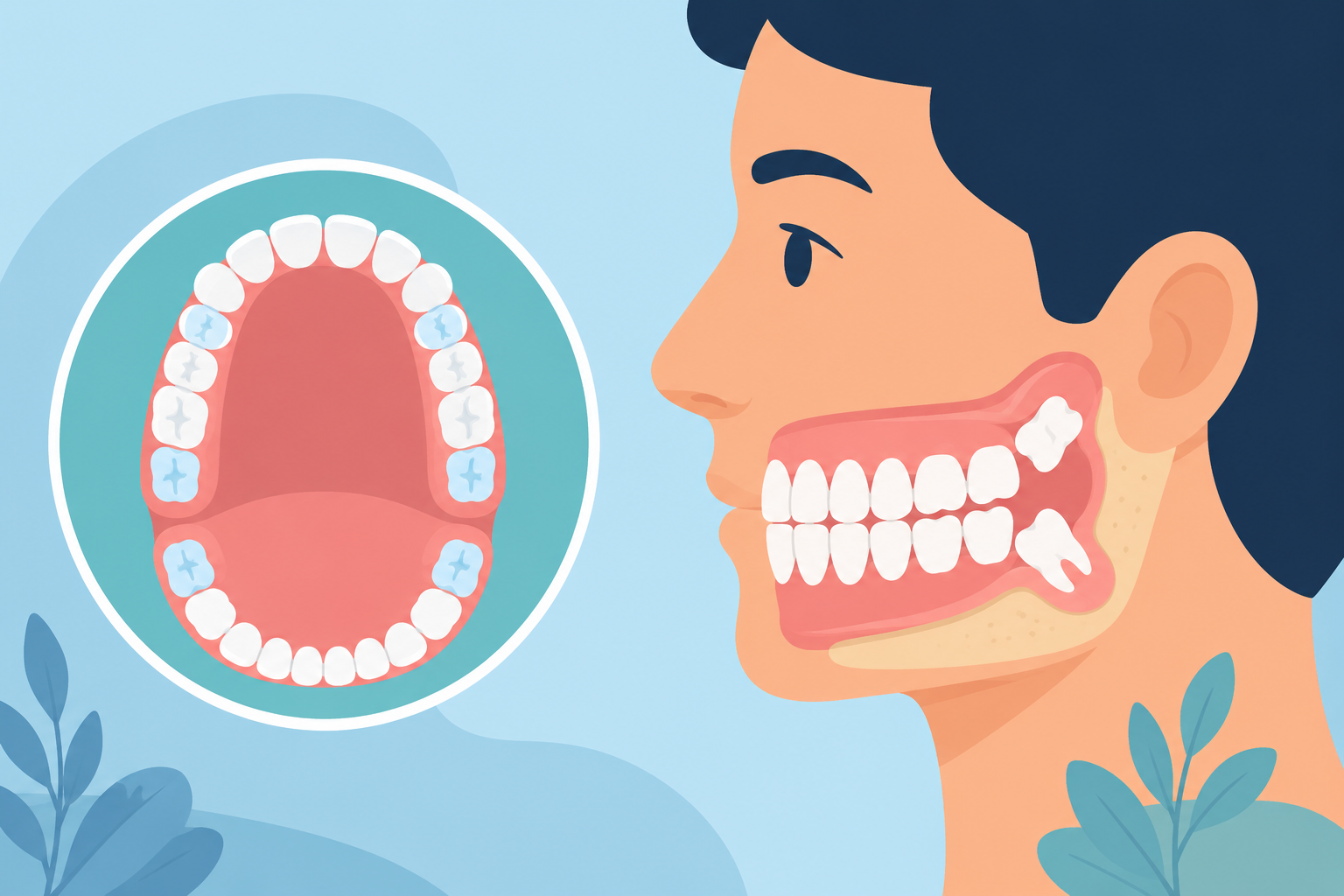
Most people hear about wisdom teeth at some point in their late teens or early twenties—often when discomfort begins, swelling appears, or a dentist brings up X-rays during a routine visit. That simple question naturally follows: How many wisdom teeth does a person have? While the most common answer is “four,” the complete answer is more nuanced. Genetics, jaw size, age, and even human evolution all influence whether you develop four wisdom teeth, fewer than four, or none at all.
This article explains the real numbers behind wisdom teeth, why some people have fewer, when they usually appear, and what that means for your long-term oral health. If you’ve ever wondered what’s really happening at the very back of your mouth, this guide gives you clear, accurate answers.
What Are Wisdom Teeth?
Wisdom teeth are your third molars, the final set of adult teeth to develop. They grow at the very back of the upper and lower jaws and typically appear years after all other permanent teeth have erupted.
Why They’re Called Wisdom Teeth
The name comes from the age they usually break through the gums—late teens to early twenties—an age once associated with maturity. Unlike baby teeth or early adult molars, wisdom teeth arrive when the jaw has already finished most of its growth.
The Evolutionary Backstory
Early humans had larger jaws and ate tougher foods that required more grinding power. Extra molars were useful for survival. As food became softer and easier to chew over thousands of years, jaw size gradually decreased. However, the number of teeth did not shrink at the same pace, which helps explain why wisdom teeth often struggle to erupt properly today.
How Many Wisdom Teeth Does a Person Normally Have?
The standard number of wisdom teeth is four, with one located in each corner of the mouth:
- Upper right
- Upper left
- Lower right
- Lower left
However, a large portion of the population naturally develops fewer than four.
The Real-World Range
Across different populations, the most common wisdom tooth counts are:
- Four wisdom teeth: Most common
- Three or two wisdom teeth: Very common
- One wisdom tooth: Less common
- Zero wisdom teeth: Increasingly common
In rare cases, some people even grow a fifth or sixth wisdom tooth due to a condition known as hyperdontia.
Why Some People Have Fewer Than Four Wisdom Teeth
If you don’t have four wisdom teeth, that is entirely normal. Several factors influence this variation.
Genetics
Genetics plays the largest role. If your parents had fewer wisdom teeth—or none at all—you are more likely to follow the same pattern.
Jaw Size
Modern jaws are often too small to support four large molars at the back of the mouth. When space is limited, one or more wisdom teeth may fail to develop or remain trapped beneath the bone.
Ongoing Evolution
Anthropologists believe humans are gradually evolving away from wisdom teeth. The growing percentage of people born without any third molars supports this long-term shift.
When Do Wisdom Teeth Usually Appear?
Wisdom teeth typically emerge between the ages of 17 and 25, though timelines vary widely.
Some individuals feel pressure or eruption as early as 15, while others never feel their wisdom teeth at all. In many cases, wisdom teeth remain fully embedded within the jawbone and are only detected through dental imaging.
Once the jaw has finished growing, space becomes a major limiting factor. This is why late-erupting wisdom teeth often encounter crowding and impaction.
What If You Have Only One, Two, or Three Wisdom Teeth?
Having fewer than four wisdom teeth is common and generally does not interfere with oral function.
- One or two wisdom teeth can function normally if properly aligned
- Three wisdom teeth typically have no long-term impact
- Zero wisdom teeth usually cause no disadvantages at all
Many people born without wisdom teeth avoid the entire category of complications related to eruption and impaction.
Do All Wisdom Teeth Need to Be Removed?
Not every wisdom tooth needs to be extracted. Many remain healthy and functional for life.
Wisdom teeth can stay when they are fully erupted, properly positioned, easy to clean, and free of infection or decay. Dentists simply monitor these teeth during regular checkups.
When wisdom teeth are impacted, angled, partially erupted, or repeatedly infected, removal is often the safest long-term option. In treatment planning, this evaluation often naturally transitions into an implant consultation when missing molars or bite stability become part of the broader care plan.
How Dentists Determine How Many Wisdom Teeth You Have
You cannot always tell how many wisdom teeth you have by feeling your gums. Some never break through the surface.
Dentists rely on panoramic dental X-rays to determine:
- The total number of wisdom teeth
- Their exact position
- Their proximity to nerves
- Their stage of development
These images allow dentists to predict whether wisdom teeth will erupt normally or cause future complications.
Common Problems Associated With Wisdom Teeth
Even when four wisdom teeth are present, smooth eruption is not guaranteed. Complications are common.
Impaction
An impacted wisdom tooth cannot fully emerge because it is blocked by bone, gum tissue, or another tooth. Impacted teeth may remain completely hidden or only partially visible.
Infection and Gum Disease
Partially erupted wisdom teeth create pockets where bacteria collect, leading to inflammation and infection. Over time, these infections can affect surrounding teeth and bone.
Tooth Decay
Because of their position at the back of the mouth, wisdom teeth are more difficult to clean. This increases the risk of cavities and gum disease.
Confusing Pain Sources
Pain at the back of the jaw can be difficult to diagnose without imaging, especially when trying to distinguish between tooth pain from a wisdom tooth versus discomfort from another molar.
What Happens During Wisdom Tooth Removal?
When removal is recommended, the procedure is safe, routine, and highly predictable.
The Procedure
Wisdom tooth extraction is usually performed under local anesthesia, IV sedation, or general anesthesia. The surgeon creates a small incision in the gum, removes any obstructing bone, extracts the tooth, cleans the socket, and places sutures if needed. Most procedures are completed within an hour.
Recovery and Healing
Swelling, soreness, and limited jaw movement are common in the first few days. Many patients experience temporary bleeding or numbness during the early healing phase, especially when sutures are used during closure. These postoperative sensations, including stitches and minor bleeding, are a normal part of the recovery process documented in surgical healing timelines.
In warm climates, inflammation can be more pronounced during the first 48 to 72 hours after surgery, making temperature control and hydration especially important for reducing heat swelling.
Long-Term Effects of Keeping Wisdom Teeth
Wisdom teeth that appear symptom-free in early adulthood may still cause issues later in life. Even fully buried teeth can place pressure on adjacent roots, contribute to bone loss, or trigger cyst formation over time without immediate warning signs.
Some patients benefit from early extraction, while others remain problem-free for decades with proper monitoring. Understanding the potential long effects helps patients make informed decisions about whether to keep or remove their wisdom teeth.
How Many Wisdom Teeth Do Children and Teens Have?
Wisdom teeth begin forming long before eruption. Tooth buds become visible on X-rays between the ages of 7 and 10.
Dentists monitor these early stages to anticipate future eruption patterns, space constraints, and potential orthodontic or surgical needs later in adolescence.
Can You Live Normally Without Wisdom Teeth?
Yes, completely. Wisdom teeth are not essential for chewing, digestion, or speech. Once healing is complete after removal—or if the teeth never formed—most people function exactly the same as before.
In fact, many patients report improved comfort and easier oral hygiene once problematic wisdom teeth are gone.
Are Extra Wisdom Teeth Possible?
Although rare, some individuals develop more than four wisdom teeth due to hyperdontia. These extra molars are usually discovered during routine imaging and may complicate eruption or extraction if treatment is required.
Final Answer: How Many Wisdom Teeth Do People Usually Have?
Most people have four wisdom teeth, but a significant portion of the population naturally has fewer—and some have none at all. The exact number you develop depends on genetics, jaw structure, and evolutionary trends.
What matters most is not the number, but whether those teeth remain healthy, properly positioned, and symptom-free. Routine dental exams and panoramic X-rays remain the most reliable way to assess your personal wisdom tooth profile.
Key Takeaways
- The typical number of wisdom teeth is four
- Many people naturally develop fewer or none
- Wisdom teeth usually erupt between ages 17 and 25
- Not every wisdom tooth needs removal
- Dental X-rays are essential for accurate evaluation
- Extraction is common but not always necessary
Understanding how many wisdom teeth you have—and how they are positioned—allows you to make confident, informed decisions about your long-term oral health.

The Best Daily Oral Hygiene Routine for Busy Adults
May 8, 2026

10 Common Myths About Wisdom Tooth Removal
November 12, 2025
How Bite Correction Surgery Fixes Overbite, Underbite, and Jaw Alignment
May 18, 2026
The Hidden Problems Wisdom Teeth Can Cause
May 15, 2026

Oral Surgery Sedation Explained in Simple Terms
May 7, 2026