Dental Implants vs Bridges: Which Is Right for You?
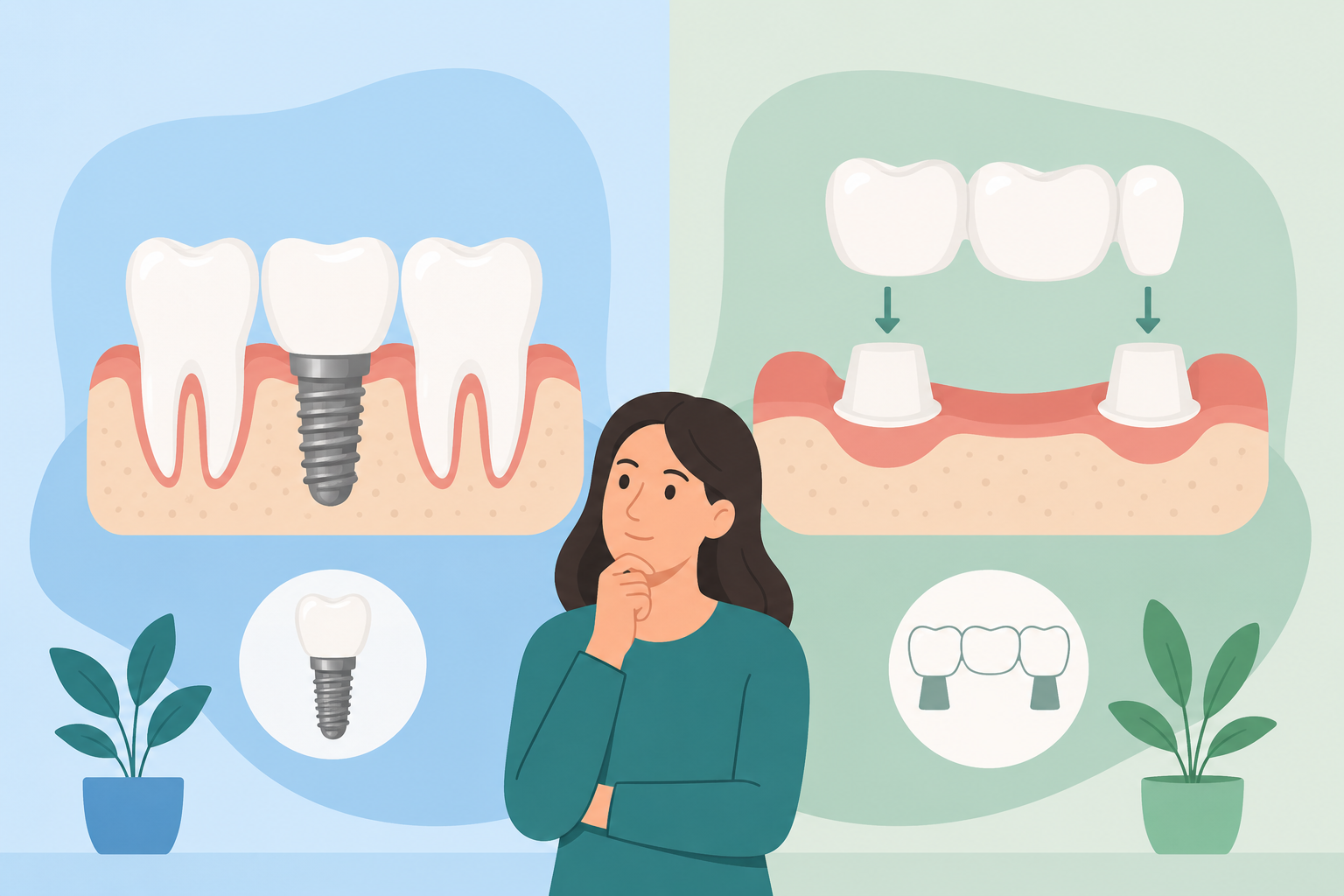
Tooth loss affects more than just your smile—it can change how you chew, speak, and maintain long-term oral health. Two of the most common restorative options are dental implants and dental bridges, and choosing between them isn’t always straightforward.
Both solutions can restore function and aesthetics, but they differ in durability, procedure, cost considerations, and long-term oral health impact. Understanding these differences helps you make a confident, informed decision with your dental specialist.
Understanding Your Tooth Replacement Options
When a tooth is missing, the surrounding teeth and jawbone begin to shift and weaken over time. That’s why timely restoration matters—not just for appearance, but for preserving oral structure.
Dental implants and bridges both address this issue, but in fundamentally different ways. Implants replace the tooth root, while bridges rely on adjacent teeth for support.
Choosing the right option depends on your oral condition, bone health, and long-term goals.
What Are Dental Implants?
Dental implants are titanium posts surgically placed into the jawbone to act as artificial tooth roots. Once healed, a crown is attached, creating a natural-looking and fully functional replacement tooth.
They are widely considered the gold standard for tooth replacement because they integrate with the bone, helping maintain jaw structure and preventing bone loss.
For patients exploring different implant solutions—whether replacing a single tooth or a full arch—this guide on single tooth implant solutions offers a clearer breakdown of available options.
Benefits of Dental Implants
- Long-lasting and durable (often decades with proper care)
- Preserve jawbone health
- Do not affect neighboring teeth
- Look and function like natural teeth
- Easier long-term maintenance compared to bridges
However, implants require sufficient bone density and a longer healing period.
What Are Dental Bridges?
A dental bridge replaces a missing tooth by anchoring an artificial tooth between two crowns placed on adjacent teeth. Unlike implants, bridges do not involve surgery into the jawbone.
Instead, they rely on the surrounding teeth for support, which makes the procedure faster but also more dependent on the condition of neighboring teeth.
Benefits of Dental Bridges
- Faster treatment timeline
- No surgical procedure required
- Generally lower upfront cost
- Effective for restoring short gaps
Limitations of Bridges
- Requires filing down healthy adjacent teeth
- Does not prevent bone loss in the jaw
- May need replacement every 7–15 years
- Higher risk of decay in supporting teeth over time
Key Differences Between Implants and Bridges
Understanding the core differences helps clarify which solution fits your needs:
1. Longevity
Dental implants are designed for long-term use and can last decades with proper care. Bridges typically have a shorter lifespan and may require replacement sooner.
2. Impact on Natural Teeth
Implants stand independently, while bridges depend on surrounding teeth, which may compromise their long-term health.
3. Bone Preservation
Implants stimulate the jawbone, preventing deterioration. Bridges do not provide this benefit, which can lead to bone loss over time.
4. Maintenance
Implants are maintained like natural teeth. Bridges require more careful cleaning to prevent decay under the crown structure.
For a deeper understanding of maintaining implants over time, this guide on dental implant care explains long-term maintenance practices that protect your investment.
When Dental Implants Are the Better Choice
Dental implants are often recommended when long-term oral health is the priority. They are ideal for patients who:
- Have sufficient jawbone density
- Want a permanent tooth replacement
- Prefer not to alter healthy adjacent teeth
- Are looking for a natural look and feel
Even in complex cases, advanced solutions exist. For example, patients with significant bone loss may still qualify through specialized procedures such as zygomatic implant, which bypass the need for traditional bone grafting.
When Dental Bridges Make More Sense
While implants are often preferred, bridges still have a strong role in restorative dentistry. They may be the right choice if:
- You need a faster solution
- Adjacent teeth already require crowns
- You are not a candidate for oral surgery
- Budget constraints are a primary concern
Bridges can restore function effectively, especially in cases where long-term bone preservation is less critical or when surgical procedures are not ideal.
Long-Term Maintenance: Implants vs Bridges
No matter which option you choose, maintenance determines success.
Dental Implants Maintenance
Implants require consistent oral hygiene, including brushing, flossing, and routine dental checkups. They do not decay, but surrounding gums can still develop issues if neglected.
Proper care routines significantly improve lifespan and comfort, especially when patients follow structured maintenance habits.
Dental Bridges Maintenance
Bridges require extra attention under the artificial tooth. Special floss tools or water flossers are often necessary to prevent plaque buildup beneath the bridge.
Neglecting this area can lead to gum disease or decay in the supporting teeth, which may compromise the entire restoration.
Cost vs Value: Thinking Long-Term
At first glance, dental bridges may seem more affordable. However, their shorter lifespan and potential need for replacement can increase long-term costs.
Dental implants involve a higher upfront investment but often provide better long-term value due to durability and reduced maintenance needs.
The right choice depends on whether you prioritize short-term savings or long-term stability.
Comfort, Function, and Confidence
Both implants and bridges restore chewing ability and improve aesthetics, but implants typically feel more natural because they function like real tooth roots.
Patients often report greater confidence with implants because they do not shift, rely on adjacent teeth, or require special cleaning routines beyond standard oral care.
Making the Right Decision with a Specialist
Choosing between implants and bridges should never be a guesswork decision. A thorough dental evaluation, including imaging and bone assessment, helps determine what’s truly suitable for your case.
Frequently Asked Questions
Are dental implants better than bridges?
Dental implants are generally considered more durable and healthier for long-term oral structure, but bridges may be better for quicker or lower-cost solutions.
How long do dental bridges last?
Most dental bridges last between 7 and 15 years, depending on oral hygiene and wear.
Is getting a dental implant painful?
The procedure is typically done under anesthesia, so discomfort is minimal during surgery. Mild soreness after is normal and manageable.
Can I replace a bridge with an implant later?
Yes, many patients choose to replace bridges with implants later for improved stability and bone preservation.
What happens if I don’t replace a missing tooth?
Ignoring a missing tooth can lead to bone loss, shifting teeth, bite issues, and long-term gum problems.
Final Thoughts
Dental implants and bridges both offer effective solutions for missing teeth, but they serve different priorities. Implants focus on long-term stability, bone health, and natural function, while bridges provide a faster, less invasive alternative.
The best choice depends on your oral health, lifestyle, and long-term expectations. A professional evaluation remains the most reliable way to determine what works best for you.
Do You Need a Simple or Surgical Extraction?
March 3, 2026

After Tooth Extraction: How to Keep Other Teeth Safe
March 25, 2026

How to Save Money on Oral Surgery Costs
April 7, 2026

When Can You Exercise After Tooth Removal?
January 23, 2026

Laser Oral Surgery: Is It Right for You?
December 29, 2025