Wisdom Teeth Problems That May Lead to Serious Cysts
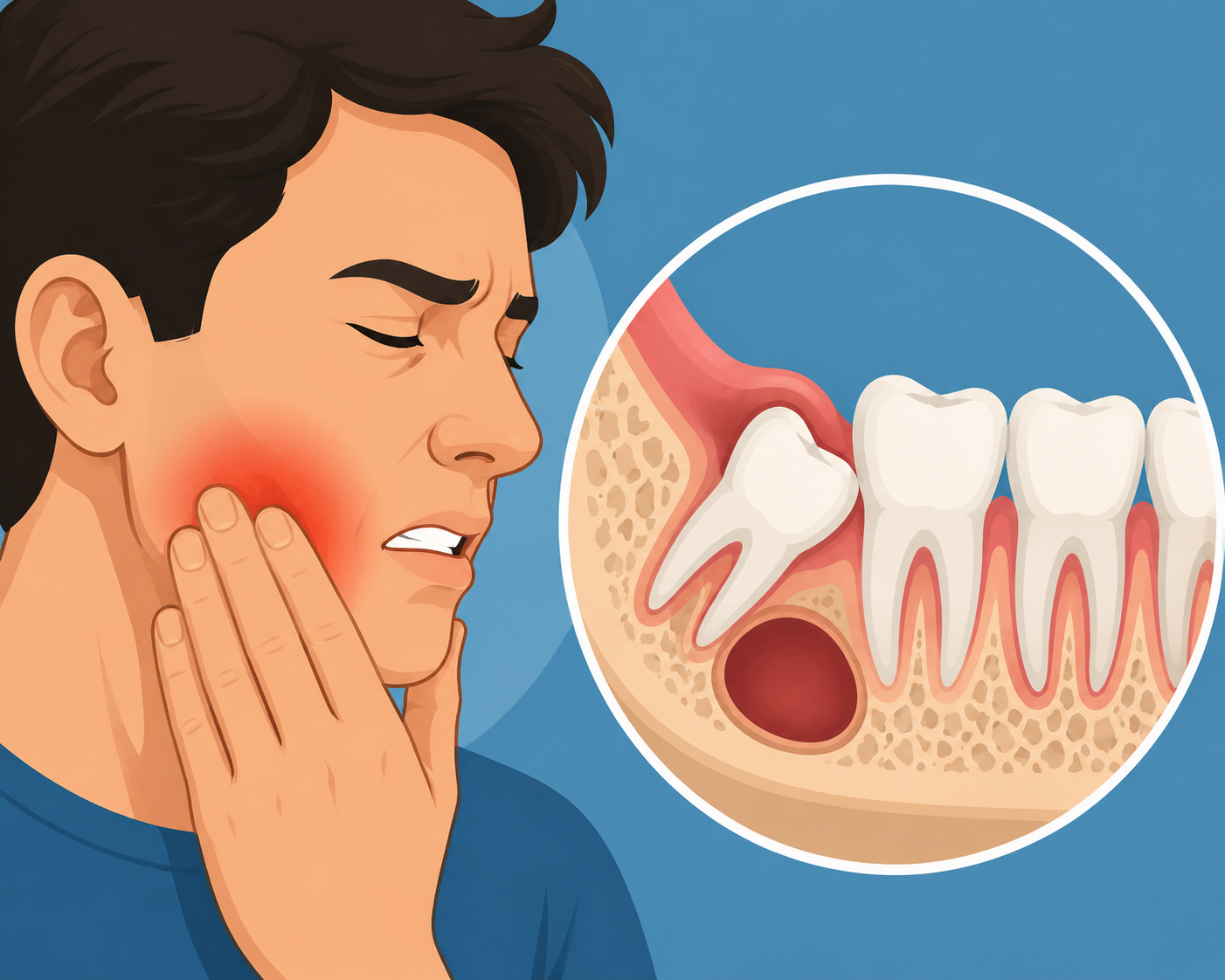
When most people think about wisdom teeth problems, they imagine pain, swelling, or crowding. But one of the lesser-known yet serious complications is the development of cysts around impacted or partially erupted wisdom teeth. These cysts can quietly grow for years, causing significant damage to your jawbone, nerves, and nearby teeth before you even realize something is wrong.
Understanding how these cysts form, what symptoms to look out for, and the available treatment options helps protect your long-term oral health and prevents complications that may require more extensive care.
Understanding Wisdom Tooth Cysts
What Exactly Is a Wisdom Tooth Cyst?
A cyst caused by a wisdom tooth typically forms when the tooth does not erupt properly and remains trapped within the jawbone. This fluid-filled sac, known medically as a dentigerous cyst, develops around the crown of an unerupted or impacted tooth. While usually benign, the cyst can become large enough to weaken bone or damage surrounding structures.
When wisdom teeth are impacted, they place pressure on adjacent tissues, creating conditions where fluid can accumulate. Over time, this collection of fluid expands and gradually erodes the surrounding jawbone.
Why Wisdom Teeth Cause Cysts More Than Other Teeth
Wisdom teeth are the last to emerge and often lack sufficient space to erupt correctly, which increases the likelihood of impaction. Chronic irritation or prolonged inflammation around a partially erupted tooth can also contribute to cyst development.
Because these cysts often form without noticeable early symptoms, many people remain unaware of the issue until bone or nerve involvement begins.
How a Cyst Forms Around an Impacted Wisdom Tooth
The Early Stages: Fluid Accumulation
Wisdom tooth cysts typically begin as small pockets of fluid around the developing tooth. At this stage, they rarely cause discomfort and are often detected only through routine imaging.
If signs of cyst activity appear early, removal of the tooth may be recommended to prevent progression.
Growth and Expansion
As the cyst enlarges, it applies pressure to the jawbone and nearby teeth. This pressure may cause gradual bone loss, shifting of adjacent teeth, or even visible asymmetry if the cyst becomes especially large.
Some individuals may experience occasional discomfort, but many have no symptoms until the cyst has grown significantly.
Complications of Untreated Cysts
If left untreated, cysts can lead to:
- Jawbone thinning or weakening
- Increased risk of jaw fracture
- Damage or movement of neighboring teeth
- Nerve compression resulting in tingling or numbness
- Development of infection
- Need for reconstructive bone surgery
Early detection through routine dental imaging is the most effective way to prevent these complications.
Signs You May Have a Wisdom Tooth Cyst
Subtle Symptoms in the Beginning
In the early stages, symptoms can be mild or nonexistent. Slight pressure, gum swelling, or general discomfort behind the molars may be the only noticeable changes—symptoms easily mistaken for normal eruption.
Symptoms That Indicate a Growing Problem
Once the cyst expands, the warning signs become more apparent:
- Persistent jaw or facial pain
- Swelling near the jaw or gums
- Difficulty opening your mouth fully
- Looseness in nearby teeth
- A sense of pressure or fullness in the jaw
- An unpleasant taste, which may signal infection
These symptoms can feel similar to changes that appear when a wisdom tooth becomes infected.
When Infection Is Involved
A cyst can sometimes develop inflammation or infection. Gum irritation, tenderness, or localized bleeding may resemble issues people experience with bleeding gums.
Any of these changes should prompt an oral health evaluation to prevent further complications.
How Dentists Diagnose Wisdom Tooth Cysts
Clinical Evaluation
Your dentist will examine the gum tissue and look for swelling, tenderness, or abnormal changes around your wisdom teeth during your check-up. However, visual inspection alone is not enough to confirm the presence of a cyst.
X-Rays and 3D Scanning
Panoramic X-rays help identify impacted teeth and detect fluid-filled sacs. In more complex situations, a CBCT scan provides detailed information about the cyst’s size, the condition of the surrounding bone, and its proximity to nerves.
This imaging helps your oral surgeon develop the safest and most effective treatment plan.
Treatment Options for Wisdom Tooth Cysts
Wisdom Tooth Extraction
Surgical removal of the impacted wisdom tooth is the most common treatment. During the procedure, both the tooth and cyst lining are addressed to reduce the chance of recurrence.
Cyst Removal (Enucleation)
Your oral surgeon may remove the cyst lining entirely to ensure it does not grow back. This procedure is often performed under sedation or general anesthesia depending on the size and complexity.
Marsupialization (for Large Cysts)
For large cysts, the surgeon may create an opening to relieve pressure and allow the cyst to shrink before completing removal during a second procedure.
Bone Reconstruction After Cyst Removal
If the cyst has caused significant bone loss, bone grafting may be necessary to rebuild stability in the jaw.
Bone restoration supports long-term function and protects the integrity of the jaw structure.
Preventing Wisdom Tooth Cysts
Routine Dental Check-Ups
Regular check-ups and imaging allow your dentist to detect early changes before symptoms become noticeable.
Early Removal of High-Risk Wisdom Teeth
Teeth that lack space to erupt or show signs of early complications may be removed preventively to avoid future cyst development.
Maintaining Good Oral Hygiene
While good hygiene cannot directly prevent cysts, reducing inflammation and infection around partially erupted wisdom teeth supports overall gum health and may limit secondary complications.
Recovery After Wisdom Tooth Cyst Removal
What to Expect After Surgery
Most patients experience mild soreness, swelling, or bruising for several days. Recovery is similar to standard wisdom tooth extraction, although larger cysts or reconstructive procedures may extend healing time.
Cold compresses and prescribed or over-the-counter medication typically manage discomfort effectively.
Long-Term Healing
If bone grafting was required, the jawbone will gradually regenerate over the following months. Follow-up imaging helps ensure the area heals properly.
Most individuals resume normal activities within a week, even as internal healing continues.
Can Wisdom Tooth Cysts Come Back?
Recurrence is unlikely when the entire cyst lining is removed. However, there is a small chance of regrowth if any cyst tissue remains. Working with an experienced oral surgeon and attending follow-up appointments reduces this risk.
When to See an Oral Surgeon
You should schedule a consultation if you notice:
- Ongoing discomfort near the molars
- Jaw swelling
- Difficulty opening your mouth
- Persistent unpleasant taste
- History of impacted wisdom teeth
- Bite changes that resemble issues experienced during bite correction.
Prompt evaluation prevents further complications and supports long-term oral health.
Final Thoughts
Wisdom tooth cysts often develop without noticeable early symptoms, but they can lead to significant issues if left untreated. Understanding how they form, recognizing the signs, and knowing your treatment options allows you to take proactive steps to protect your oral health.
Whether you are experiencing discomfort or simply keeping up with routine care, early evaluation and timely treatment can prevent bone loss, nerve involvement, and other long-term complications.
How Oral Health Directly Impacts Your Overall Health
February 12, 2026
Getting Wisdom Teeth Removed Without Insurance in Florida: What to Know
February 6, 2026

Can Diabetics Safely Undergo Oral Surgery?
January 6, 2026
Cavities Explained: Causes, Prevention, and Treatment
January 14, 2026

Are Cavities Contagious? What You Need to Know
February 2, 2026