Common Facial Fractures Explained: Orbital, Nasal & More
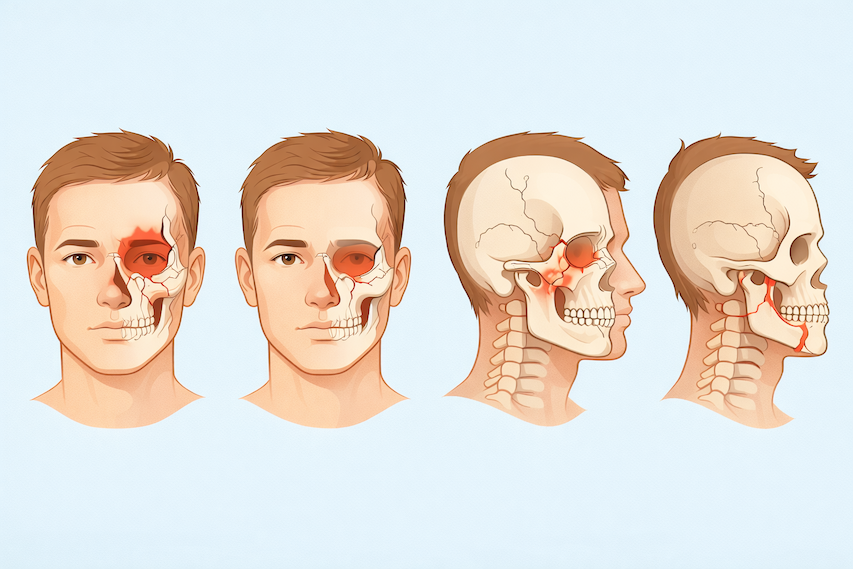
When most people think about broken bones, they picture an arm in a cast or a leg in a brace. But the face is made up of a complex network of delicate bones that are just as vulnerable to injury — and often far more complicated to treat.
Facial fractures can result from car accidents, sports injuries, falls, or physical trauma. Because these bones support breathing, vision, chewing, and speech, damage can affect both function and appearance. Early diagnosis and proper treatment are critical.
In this guide, we’ll break down the most common types of facial fractures, their symptoms, causes, diagnostic methods, and treatment options — and explain when to seek specialized facial trauma care.
What Is a Facial Fracture?
A facial fracture is a break in one or more of the bones that form the facial skeleton. These bones provide structural support for the eyes, nose, cheeks, and jaw while protecting vital structures like the brain and sinuses.
Depending on severity, a facial fracture can impact:
- Vision
- Breathing
- Bite alignment
- Speech
- Facial symmetry
Some fractures are minor and stable. Others require immediate surgical intervention to prevent long-term complications.
Common Causes of Facial Bone Fractures
Facial trauma can happen in many ways, but the most frequent causes include:
- Motor vehicle accidents
- Contact sports (football, boxing, MMA)
- Falls, especially in older adults
- Physical altercations
- Workplace or construction accidents
In high-impact situations, facial fractures may occur alongside head or neck injuries. That’s why prompt evaluation is essential.
1. Orbital Fracture (Eye Socket Fracture)
What Is an Orbital Fracture?
An orbital fracture involves a break in one of the bones surrounding the eye socket. These injuries typically occur after a direct blow to the face — such as being struck by a ball, elbow, or fist.
There are different types of orbital fractures, including “blowout” fractures, which occur when pressure causes the thin orbital floor to break.
Symptoms
- Swelling and bruising around the eye
- Double vision
- Restricted eye movement
- Numbness in the cheek or upper lip
- Sunken appearance of the eye
Treatment
Mild cases may heal with observation, ice, and medication. More severe fractures may require surgery to reposition bone fragments and prevent long-term vision issues.
Because orbital injuries can affect eyesight, immediate evaluation by a facial trauma specialist is crucial.
2. Nasal Fracture (Broken Nose)
What Is a Nasal Fracture?
A nasal fracture is the most common facial fracture. It occurs when the nasal bone or cartilage is cracked or displaced due to blunt force.
Even though it’s common, a broken nose should never be ignored.
Symptoms
- Nosebleeds
- Swelling and bruising
- Crooked or misshapen appearance
- Difficulty breathing through the nose
- Tenderness to touch
Treatment
Minor fractures may only require rest, ice, and pain management. If the nose is visibly misaligned, a specialist may perform manual realignment. Severe cases may require surgical correction to restore structure and airflow.
3. Zygomatic Fracture (Cheekbone Fracture)
What Is a Zygomatic Fracture?
The zygomatic bone forms the prominence of the cheek and part of the eye socket. A fracture here is sometimes called a “tripod fracture” because it often involves three connected points of the bone.
These injuries can significantly affect facial symmetry.
Symptoms
- Flattened or asymmetrical cheek
- Pain when opening the mouth
- Numbness in the upper lip or cheek
- Swelling and bruising
- Double vision in some cases
Treatment
Most zygomatic fractures require surgical repair to restore proper alignment. Surgeons often use small plates and screws to stabilize the bone and preserve facial contour.
Without treatment, long-term asymmetry or nerve issues may develop.
4. Maxillary Fracture (Upper Jaw Fracture)
What Is a Maxillary Fracture?
The maxilla is the upper jawbone that supports the upper teeth and forms part of the midface structure. These fractures are usually caused by high-impact trauma.
They can affect bite alignment and breathing.
Symptoms
- Misaligned teeth or bite
- Difficulty chewing
- Facial swelling
- Nosebleeds
- Sinus involvement
- Midface instability
Treatment
Maxillary fractures often require reconstructive surgery. Treatment may involve collaboration between oral and maxillofacial surgeons and ENT specialists to restore both function and appearance.
5. Mandibular Fracture (Lower Jaw Fracture)
What Is a Mandibular Fracture?
The mandible, or lower jawbone, is essential for chewing, speaking, and maintaining facial structure. It’s one of the most frequently fractured facial bones due to its prominence.
Symptoms
- Jaw pain and swelling
- Inability to fully open the mouth
- Misaligned teeth
- Difficulty speaking
- Bleeding inside the mouth
Treatment
Treatment typically involves surgical stabilization using plates and screws. In some cases, the jaw may be temporarily immobilized to allow proper healing.
Because the jaw plays such a central role in daily function, precise alignment is critical.
6. Le Fort Fractures (Midface Fractures)
Le Fort fractures are severe midface fractures categorized into three types:
Le Fort I
A horizontal fracture above the upper teeth.
Le Fort II
A pyramidal fracture involving the upper jaw, nose, and orbit.
Le Fort III
Also called craniofacial disjunction, where the facial skeleton separates from the skull base.
These injuries are typically the result of high-impact trauma and often require emergency surgical intervention and long-term reconstructive care.
How Are Facial Fractures Diagnosed?
Accurate diagnosis is essential for proper treatment.
Physical Examination
A specialist will assess facial symmetry, tenderness, nerve sensation, jaw movement, and eye function.
Imaging
CT scans are the gold standard for diagnosing facial fractures. They provide detailed views of bone displacement and internal damage.
Specialist Evaluation
Oral and maxillofacial surgeons are uniquely trained to evaluate and treat complex facial injuries.
When Should You See a Specialist?
You should seek immediate evaluation if you experience:
- Persistent swelling or bruising
- Vision changes
- Breathing difficulty
- Facial asymmetry
- Severe pain
- Bite changes
Even minor trauma can hide significant fractures. Early intervention prevents long-term complications.
Facial Fracture Treatment: What to Expect
Treatment depends on the type and severity of the fracture.
Non-Surgical Management
- Ice and rest
- Pain management
- Antibiotics (if sinuses are involved)
- Close monitoring
Surgical Management
- Open reduction (repositioning bones)
- Internal fixation with plates or screws
- Reconstructive procedures for complex injuries
Modern surgical techniques prioritize both functional recovery and cosmetic outcomes.
Recovery After Facial Fracture Treatment
Healing time varies depending on injury severity.
Patients are typically advised to:
- Avoid contact sports
- Follow a soft-food diet
- Maintain excellent oral hygiene
- Attend follow-up appointments
- Avoid pressure on the face
Most patients recover well when treatment is timely and properly managed.
Why Prompt Treatment Matters
Facial fractures are not just cosmetic injuries. Left untreated, they can cause:
- Chronic pain
- Vision problems
- Breathing issues
- Permanent asymmetry
- Bite misalignment
Quick diagnosis and expert surgical care significantly improve outcomes.
Final Thoughts
Facial fractures require more than simple first aid. Because the face houses critical structures that control breathing, vision, speech, and chewing, even small injuries deserve professional evaluation.
From orbital and nasal fractures to complex Le Fort injuries, understanding the signs and seeking early treatment can protect both your health and appearance. If you suspect facial trauma, consult a qualified oral and maxillofacial surgeon for accurate diagnosis and comprehensive care.
How Rare Are Serious Wisdom Tooth Complications?
June 12, 2026
Can Wisdom Teeth Cause Fever or Chills?
January 12, 2026
Sideways Wisdom Teeth? What Patients Should Expect
May 20, 2026

Why Summer Is Perfect for Wisdom Tooth Removal
May 25, 2026
How Stress Affects Your Teeth (And What You Can Do About It)
January 20, 2026