Gum Flap Infection Around Wisdom Teeth: Causes & Care
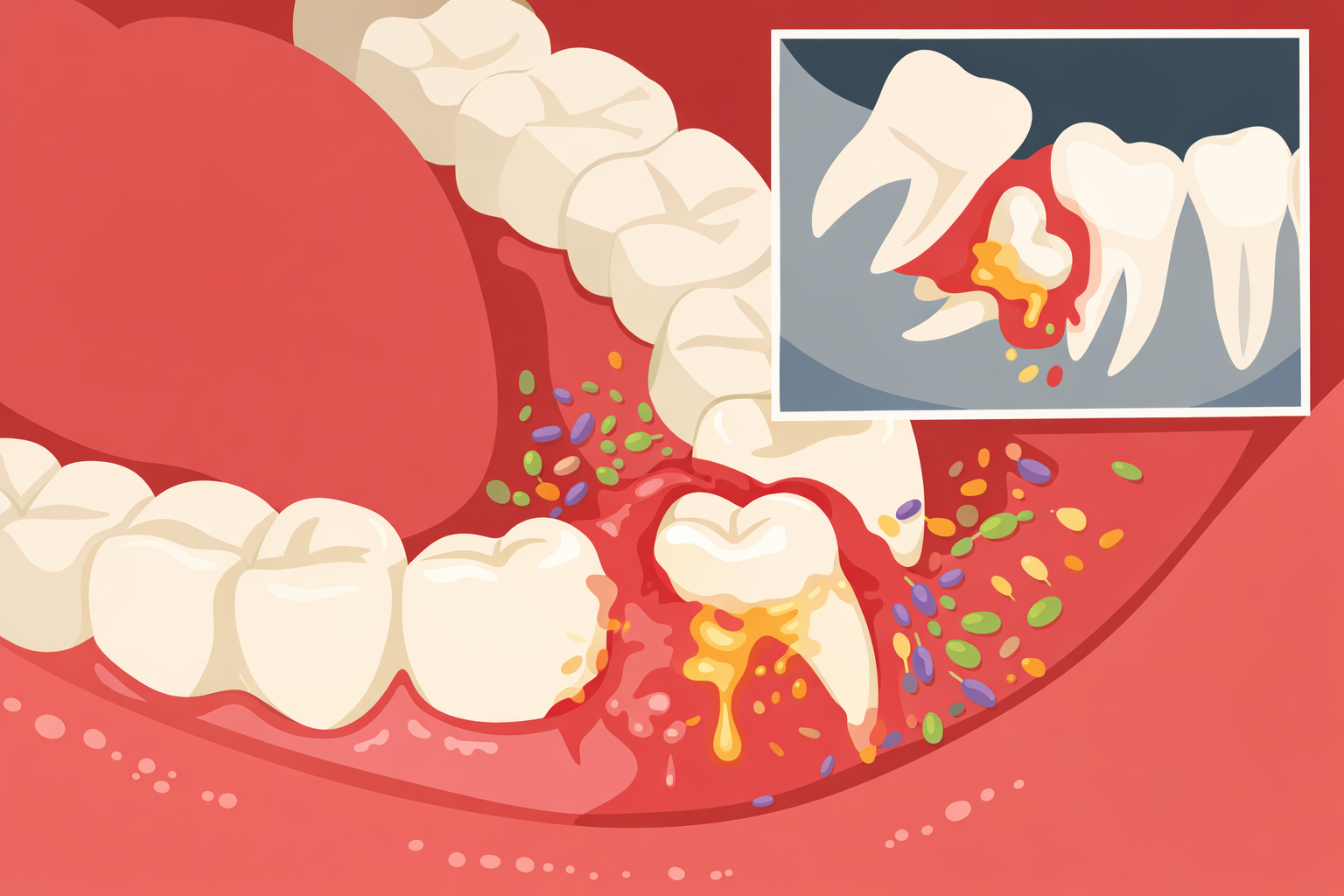
Gum flap infections around wisdom teeth are more common than most people realize. If you’ve ever felt swelling, tenderness, or a bad taste near the back of your mouth, you may have experienced this condition without knowing its name. Known medically as pericoronitis, gum flap infections develop when bacteria and food particles get trapped beneath the gum tissue covering a partially erupted wisdom tooth.
Wisdom teeth often emerge in tight spaces, making them harder to clean and more prone to infection. Left untreated, gum flap infections can lead to severe pain, swelling, difficulty opening the mouth, and in rare cases, systemic infection. Understanding why gum flap infections happen, how they are treated, and when to seek professional care can help prevent complications and protect your overall oral health.
What Is a Gum Flap Infection Around Wisdom Teeth?
A gum flap infection occurs when a wisdom tooth partially erupts through the gums, leaving a small flap of gum tissue covering part of the tooth.
Why Gum Flaps Form
Wisdom teeth are the last molars to develop and erupt. Because many mouths do not have enough space, these teeth often:
- Erupt at an angle
- Become partially stuck under gum tissue
- Remain partially covered by soft tissue
This leftover gum tissue creates a pocket where bacteria thrive.
What Causes Gum Flap Infections?
Several factors increase the risk of infection around partially erupted wisdom teeth.
Poor Accessibility for Cleaning
The back of the mouth is difficult to reach with a toothbrush and floss. Even people with excellent oral hygiene can struggle to clean this area properly.
Food Trapping
Small food particles easily get stuck beneath the gum flap, creating an environment for bacteria growth.
Bacterial Overgrowth
Once bacteria multiply under the gum flap, inflammation begins quickly.
Common Symptoms of Gum Flap Infection
Symptoms can vary from mild irritation to severe pain.
Early Warning Signs
- Red or swollen gum tissue
- Mild tenderness
- Bad taste near the tooth
- Mild bad breath
Advanced Infection Symptoms
- Severe jaw pain
- Swelling in cheek or jaw
- Difficulty opening mouth fully
- Fever
- Swollen lymph nodes
If symptoms worsen quickly, it’s important to seek professional care.
Call Us at 305-552-1193
Why Gum Flap Infections Should Not Be Ignored
Some people assume the pain will go away on its own. While symptoms may temporarily improve, infections often return.
Risk of Recurrent Infection
Once bacteria colonize under a gum flap, repeated infections are common.
Risk to Adjacent Teeth
Infections can spread to nearby molars, increasing cavity and gum disease risk.
Risk of Systemic Infection
In rare cases, untreated infections can spread beyond the mouth.
How Dentists Diagnose Gum Flap Infections
Diagnosis typically involves both a clinical exam and imaging.
Visual Examination
Dentists check for swelling, redness, and discharge.
Dental X-Rays
X-rays help determine:
- Tooth position
- Bone involvement
- Infection spread
- Impaction severity
Treatment Options for Gum Flap Infections
Treatment depends on infection severity and wisdom tooth positioning.
Professional Cleaning and Irrigation
Mild infections may only require deep cleaning and antibacterial rinses.
Antibiotics
Moderate infections often require oral antibiotics to reduce bacteria levels.
Gum Flap Removal (Operculectomy)
In some cases, removing the gum flap prevents recurring infection.
Wisdom Tooth Removal
If infections are frequent, removal is often the most effective long-term solution.
What Happens If the Wisdom Tooth Is Removed?
Wisdom tooth removal eliminates the source of repeated infections.
Benefits of Removal
- Prevents future infections
- Protects neighboring teeth
- Improves oral hygiene access
- Reduces long-term complications
Patients preparing for surgery often review a recovery timeline to understand healing expectations.
Home Care Tips for Mild Gum Flap Irritation
While home care cannot cure infection, it can reduce discomfort.
Saltwater Rinses
Warm saltwater helps reduce bacteria and inflammation.
Antibacterial Mouthwash
Helps control bacterial growth in hard-to-clean areas.
Gentle Brushing
Use a soft brush to clean around the area without causing trauma.
When Home Care Is Not Enough
You should seek professional care if you experience:
- Persistent pain
- Facial swelling
- Fever
- Difficulty swallowing
- Pus discharge
Early treatment prevents more serious complications.
How Gum Flap Infections Affect Daily Life
Many people underestimate how much this condition can affect routine activities.
Eating Difficulties
Chewing becomes painful, especially with crunchy or hard foods.
Sleep Disruption
Pain and swelling can worsen when lying down.
Speaking Discomfort
Jaw stiffness may affect speech clarity.
Who Is Most at Risk?
Certain groups are more likely to develop gum flap infections.
Teens and Young Adults
Wisdom teeth typically erupt between ages 17–25.
People With Crowded Teeth
Limited space increases partial eruption risk.
Patients With Poor Wisdom Tooth Angles
Teeth growing sideways are harder to clean.
Preventing Gum Flap Infections
Prevention focuses on monitoring and hygiene.
Regular Dental Exams
Routine monitoring helps detect problems early.
Early Wisdom Tooth Evaluation
Early imaging helps predict eruption problems.
Professional Cleanings
Help reduce bacteria levels around hard-to-reach areas.
Long-Term Outlook
Most gum flap infections can be treated successfully when addressed early.
If wisdom teeth are removed when recommended, most patients never experience recurring infection. Delaying treatment often leads to repeated pain cycles and more complex procedures later.
When to See an Oral Surgeon
Consider evaluation if:
- Wisdom tooth pain happens repeatedly
- Gum swelling comes and goes
- You experience infection more than once
- X-rays show partial impaction
Early evaluation usually means simpler treatment.
Final Thoughts
Gum flap infections around wisdom teeth are uncomfortable, but they are highly treatable. The key is recognizing symptoms early and understanding when professional care is needed.
If you are experiencing swelling, pain, or infection near your wisdom teeth, early evaluation can prevent more serious problems. Whether treatment involves cleaning, medication, gum tissue adjustment, or removal, modern oral surgery techniques make treatment safe and predictable.
Taking action early protects not only your wisdom teeth area but also your overall oral and systemic health.

Wisdom Tooth Removal Cost Guide: 2026 Price Breakdown
February 17, 2026

Wisdom Tooth Removal Aftercare: How to Sleep Better
May 1, 2026
Getting Wisdom Teeth Removed Without Insurance in Florida: What to Know
February 6, 2026
The Hidden Risks of Ignoring Wisdom Tooth Pain
April 1, 2026
Sideways Wisdom Teeth? What Patients Should Expect
May 20, 2026