Horizontal Wisdom Teeth: What It Means and Treatment Options
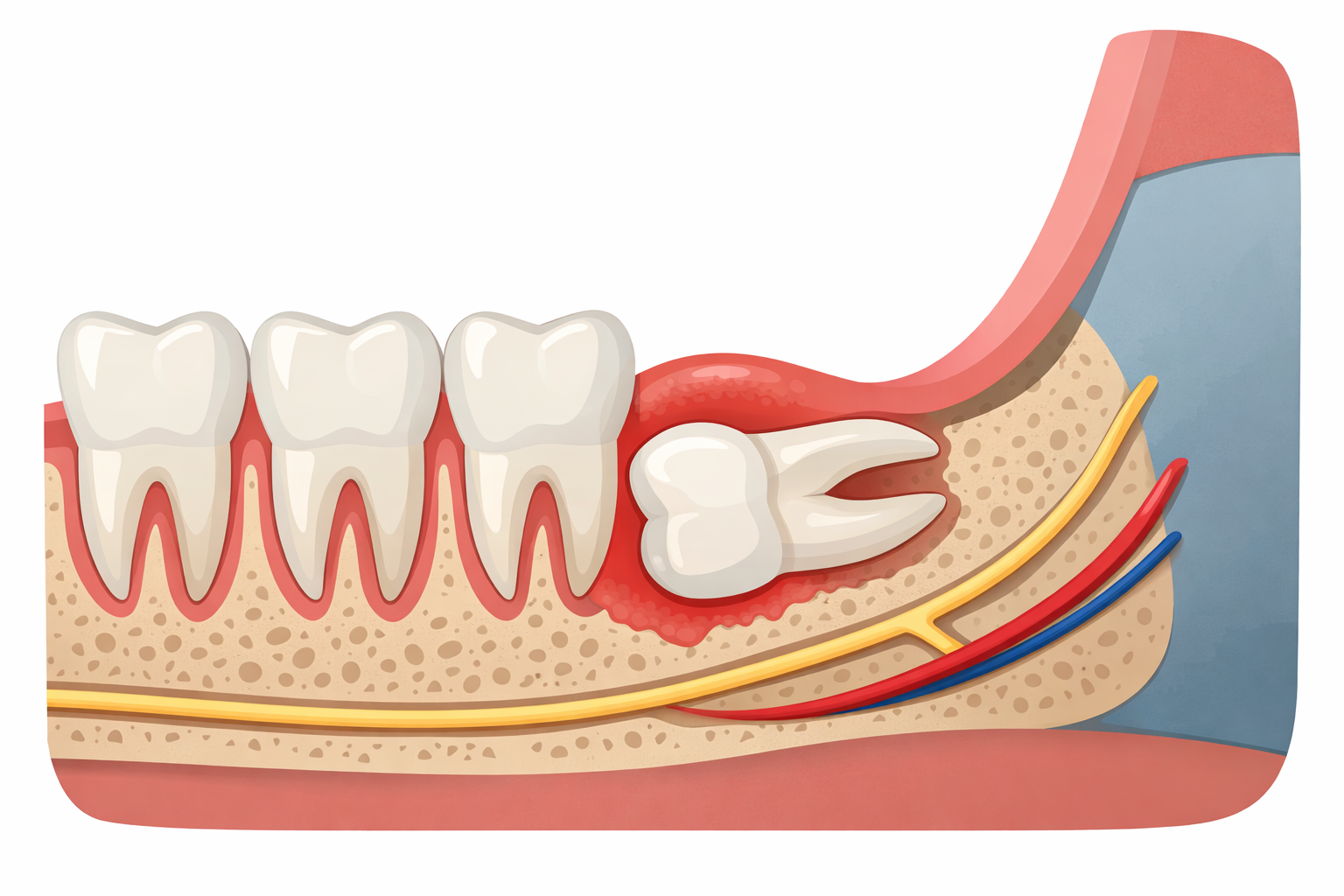
Wisdom teeth are the last set of molars to develop, usually emerging in your late teens or early twenties. For some people, they come in without issue. For others, they grow at the wrong angle — including completely sideways. When this happens, they’re known as horizontal wisdom teeth.
If you’ve been told you have a horizontal wisdom tooth or you’re experiencing pain in the back of your mouth, it’s important to understand what this means and what your options are. Left untreated, horizontally impacted wisdom teeth can cause significant discomfort and long-term dental complications.
This guide explains what horizontal wisdom teeth are, why they happen, the symptoms to watch for, and when removal becomes necessary.
What Are Horizontal Wisdom Teeth?
A horizontal wisdom tooth is a third molar that grows at a 90-degree angle instead of upright. Instead of pushing up through the gum like a normal tooth, it grows sideways toward the neighboring molar.
Because there isn’t enough space in most adult jaws to accommodate wisdom teeth, they often become impacted. “Impacted” means the tooth cannot fully erupt through the gums. Horizontal impaction is one of the more severe types.
Types of Wisdom Tooth Impaction
Dentists generally classify impacted wisdom teeth into four categories:
- Vertical impaction – tooth is upright but stuck under the gum
- Mesial impaction – tooth angles forward toward the front of the mouth
- Distal impaction – tooth angles toward the back
- Horizontal impaction – tooth lies completely sideways
Horizontal impaction tends to create more pressure on the adjacent molar, increasing the risk of damage.
Why Do Wisdom Teeth Grow Sideways?
There are several reasons horizontal wisdom teeth develop.
Lack of Jaw Space
Modern jaws are often too small to fit third molars. When there isn’t enough room, the tooth may shift direction as it attempts to erupt.
Genetics
If your parents had impacted wisdom teeth, there’s a higher chance you will as well. Jaw size and tooth alignment are often inherited traits.
Late Eruption Timing
Wisdom teeth erupt last, after the other permanent teeth are already in place. By that time, space in the jaw is usually limited.
Symptoms of a Horizontal Wisdom Tooth
Some people don’t realize they have a horizontal wisdom tooth until an X-ray reveals it. Others experience noticeable symptoms.
Jaw Pain and Pressure
A sideways tooth can press against the adjacent molar, causing constant pressure or aching in the back of the jaw.
Swollen or Tender Gums
If the tooth partially erupts, bacteria can collect under the gum flap. This often leads to inflammation and tenderness.
Headaches or Ear Pain
The pressure from an impacted wisdom tooth may radiate through the jaw, causing discomfort that feels like headaches or ear pain.
Difficulty Opening Your Mouth
Severe impaction can cause stiffness or limited jaw movement, especially if infection develops.
If you’re experiencing any of these symptoms, early evaluation is key to preventing complications.
Are Horizontal Wisdom Teeth Dangerous?
Not every impacted tooth causes immediate problems, but horizontal wisdom teeth have a higher risk of complications compared to other types.
Damage to Adjacent Teeth
A sideways wisdom tooth pushes directly into the second molar. Over time, this pressure can:
- Cause tooth decay
- Damage the root structure
- Lead to bone loss around the neighboring tooth
Infection (Pericoronitis)
When a wisdom tooth partially erupts, bacteria can become trapped. This infection, known as pericoronitis, can cause swelling, pain, and difficulty swallowing.
Cysts or Jaw Damage
In rare cases, impacted wisdom teeth can form cysts around the tooth sac. These cysts may damage surrounding bone and teeth if not treated.
How Dentists Diagnose Horizontal Wisdom Teeth
Diagnosis typically involves a clinical exam and digital X-rays. Panoramic imaging allows the dentist or oral surgeon to see:
- The exact angle of the tooth
- Proximity to nearby nerves
- Pressure on adjacent teeth
- Bone involvement
If imaging confirms horizontal impaction, your provider will discuss whether removal is recommended.
Learn more about wisdom teeth removal procedure to understand how treatment is performed.
Do Horizontal Wisdom Teeth Need to Be Removed?
In most cases, yes. Horizontal impactions rarely resolve on their own.
When Removal Is Recommended
Extraction is usually advised if:
- The tooth is causing pain
- There is infection or swelling
- The adjacent molar is at risk
- A cyst is forming
- Orthodontic stability is compromised
Even if you aren’t currently in pain, preventative removal may be recommended to avoid future complications.
What to Expect During Removal
Horizontal wisdom tooth extraction is typically performed by an oral and maxillofacial surgeon.
Step 1: Sedation and Comfort
Depending on your needs, options may include local anesthesia, IV sedation, or general anesthesia.
Step 2: Surgical Access
Because the tooth is fully or partially trapped in bone, a small incision is made in the gum. The surgeon may remove a small amount of bone to access the tooth.
Step 3: Sectioning the Tooth
Horizontally impacted teeth are often divided into smaller sections for safer removal.
Step 4: Suturing and Healing
Once removed, the area is cleaned and sutured. Dissolvable stitches are commonly used.
Recovery Timeline After Horizontal Wisdom Tooth Removal
Healing varies by patient, but most follow a similar timeline.
First 24–48 Hours
- Swelling peaks
- Mild bleeding may occur
- Soft foods are recommended
Days 3–5
- Swelling gradually decreases
- Bruising may appear
- Discomfort significantly improves
One to Two Weeks
- Stitches dissolve
- Gum tissue continues healing
- Normal activity resumes
Following post-operative instructions carefully reduces the risk of dry socket and infection.
What Happens If You Delay Treatment?
Delaying removal can increase surgical complexity later. As you age:
- Bone becomes denser
- Roots become more developed
- Healing may take longer
Additionally, ongoing pressure can permanently damage the neighboring molar, potentially leading to root canal treatment or extraction.
Early evaluation often makes the procedure simpler and recovery smoother.
When to Seek Immediate Care
Call your provider immediately if you experience:
- Severe swelling
- Fever
- Difficulty swallowing
- Pus or foul taste
- Persistent numbness
If symptoms escalate quickly, it’s best to call us directly at 305-552-1193 to speak with a team member who can guide you on next steps.
For non-emergency consultations, you can schedule an evaluation to determine the right treatment plan.
Preventing Complications Before They Start
Routine dental exams and early X-rays in the teenage years allow providers to monitor wisdom tooth development. If horizontal positioning is identified early, removal can often be planned before pain or infection begins.
Proactive treatment typically results in:
- Shorter recovery
- Lower complication risk
- Less discomfort overall
Final Thoughts
Horizontal wisdom teeth are more than just an inconvenience. Because they grow sideways and press directly into adjacent teeth, they pose a higher risk for infection, decay, and long-term damage.
The good news is that modern oral surgery techniques make removal safe, efficient, and highly predictable. If you’ve been diagnosed with a horizontal impaction or are experiencing symptoms, early evaluation can protect your oral health and prevent more serious complications down the road.

When Dentists Refer You to an Oral Surgeon: What to Expect
March 17, 2026

Oral Surgery vs. General Dentistry: What Patients Should Really Know
January 8, 2026
Why Wisdom Tooth Pain Gets Worse at Night
March 30, 2026

Dry Socket After Wisdom Teeth Removal: Symptoms and Prevention
December 12, 2025

Tips for Managing Pain Without Overusing Medication
March 10, 2026