How Much Does a Dental Crown Cost in 2026?
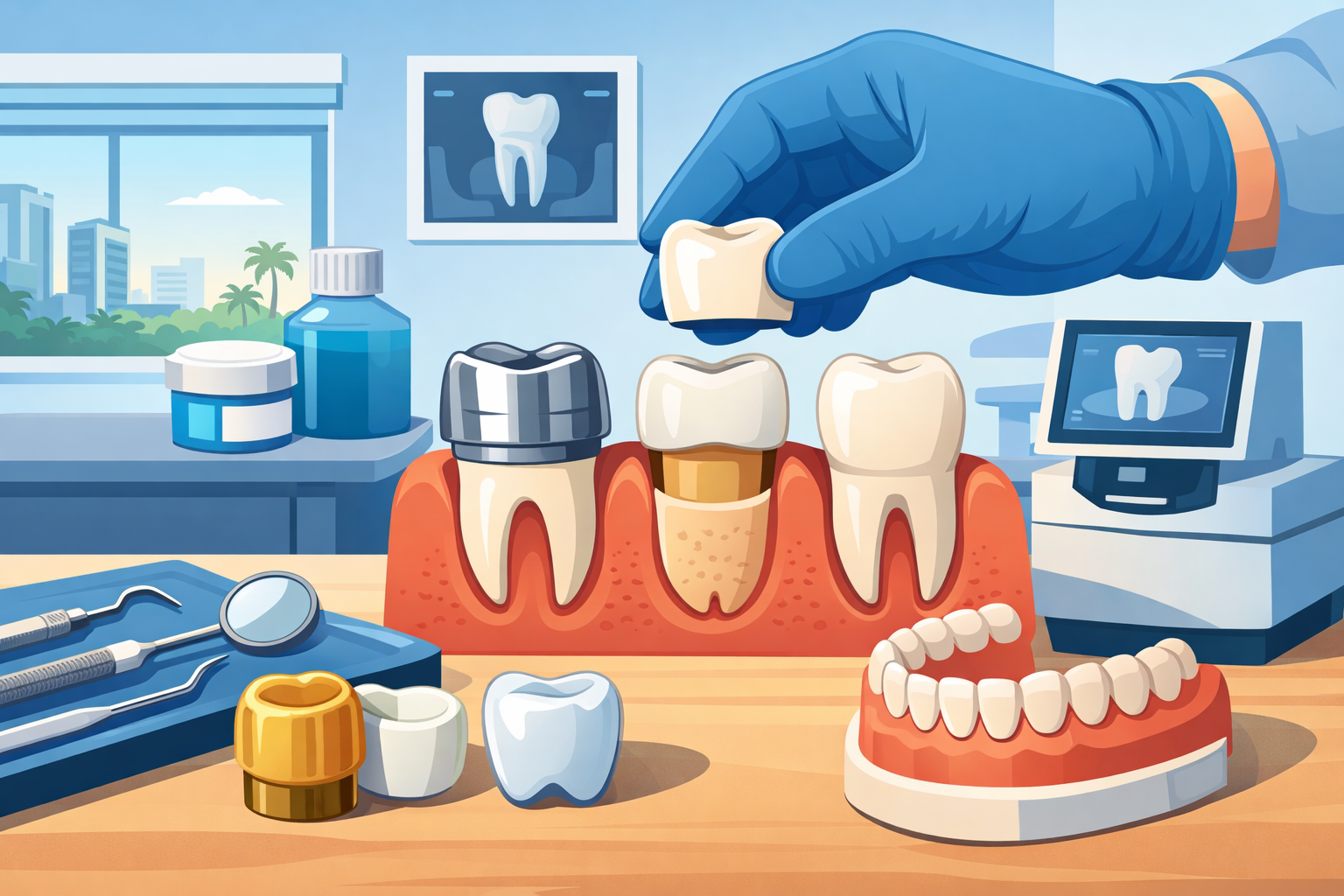
If your dentist recently recommended a dental crown, one of the first things you’re probably wondering is how much it’s going to cost. That’s a fair question. Dental treatment is an investment, and understanding the numbers helps you plan with confidence.
The price of a dental crown depends on several factors, including the material used, your location, the condition of your tooth, and whether you have insurance. Below, we break down realistic pricing ranges, insurance coverage details, and what influences the final cost.
What Is a Dental Crown?
A dental crown is a custom-made cap that fits over a damaged or weakened tooth. It restores strength, function, and appearance while protecting the remaining natural structure.
Crowns are commonly recommended when a tooth:
- Has a large cavity that can’t support a filling
- Is cracked or fractured
- Has undergone a root canal
- Is severely worn down
- Needs cosmetic improvement
Instead of removing the tooth, a crown allows you to preserve it. That’s often the most conservative and cost-effective long-term solution.
Average Cost of a Dental Crown
In the United States, the typical cost of a dental crown ranges between:
- Porcelain-fused-to-metal: $900 – $1,500 per tooth
- All-ceramic or porcelain: $1,000 – $1,800 per tooth
- Zirconia: $1,200 – $2,000 per tooth
- Gold: $1,000 – $2,500 per tooth
These estimates usually reflect pricing without insurance.
Costs can be higher in metropolitan areas due to increased operating expenses and laboratory fees.
What Affects the Cost of a Crown?
The final price isn’t just about the crown itself. Several variables influence your total expense.
Crown Material
The material used has a major impact on cost.
- Porcelain or ceramic crowns look the most natural and are ideal for front teeth.
- Zirconia crowns are highly durable and blend well aesthetically.
- Gold crowns are extremely long-lasting but less common today.
Stronger, more aesthetic materials often require advanced fabrication, which increases cost.
Tooth Location
Back teeth endure greater chewing pressure. That often requires stronger materials, which can slightly increase pricing compared to front-tooth crowns.
Additional Procedures
Sometimes a crown isn’t the only treatment required.
You may also need:
- A root canal
- Core buildup
- Post placement
For example, if a root canal is necessary before placing the crown, overall treatment costs will increase. Reviewing broader surgical cost breakdown can help you understand how insurance typically applies to major dental procedures.
Lab and Technology Fees
Traditional crowns are fabricated in a dental lab, requiring impressions and two visits. Same-day digital crowns are created in-office using CAD/CAM technology. While convenient, same-day options may come at a slightly higher fee.
Cost With Insurance vs Without
Insurance significantly changes your out-of-pocket expense.
Most dental plans categorize crowns as a major restorative procedure.
Typical Coverage Structure
- Preventive care: 100% covered
- Basic procedures: 70–80% covered
- Major procedures (crowns): 50% covered
However, coverage often includes:
- Annual maximum limits (commonly $1,000–$2,000)
- Waiting periods
- Deductibles
Example Scenario
If your crown costs $1,400 and your insurance covers 50%, you may pay around $700, provided you haven’t reached your annual maximum.
Without insurance, the full $1,400 would typically be your responsibility.
Always verify your benefits before starting treatment to avoid surprises.
Are Dental Crowns Worth the Investment?
In most cases, yes.
A crown protects your natural tooth from further damage. If the tooth fractures or becomes infected, treatment may escalate to extraction or implant placement.
An implant can cost significantly more than a crown. Preserving your natural tooth is often the most economical long-term strategy.
How Long Do Dental Crowns Last?
With proper care, a crown can last 10–15 years or longer.
Longevity depends on:
- Oral hygiene habits
- Teeth grinding
- Diet
- Regular dental checkups
Good home care is essential. Replacing your toothbrush at the right intervals helps prevent bacterial buildup and gum issues.
The Dental Crown Procedure: What to Expect
Understanding the process can make the cost feel more manageable.
First Appointment
- Tooth reshaped
- Impressions taken
- Temporary crown placed
Second Appointment
- Temporary crown removed
- Permanent crown cemented
- Bite adjusted
If you’re experiencing sensitivity, visible cracks, or discomfort when chewing, it’s best not to delay evaluation.
Ways to Make Crowns More Affordable
If cost is a concern, you have options.
Payment Plans
Many dental offices offer in-house financing or third-party payment solutions.
HSA and FSA Accounts
Pre-tax health savings accounts can be used for crown procedures.
Address Problems Early
Small issues are less expensive than advanced damage. Routine exams reduce the likelihood of needing major restorative work.
Crown vs Other Treatment Options
It helps to compare alternatives before making a decision.
Crown vs Filling
Fillings are less expensive but only suitable for smaller areas of damage.
Crown vs Extraction
Extraction may appear cheaper initially. However, replacing the tooth with an implant or bridge is typically much more expensive in the long run.
Crown vs Implant
Implants are excellent for missing teeth but involve surgery and higher costs. When possible, preserving your natural tooth with a crown is generally preferable.
When Should You Not Delay a Crown?
Waiting can lead to:
- Tooth fracture
- Infection
- Root canal treatment
- Tooth loss
The longer a damaged tooth remains untreated, the more complex and costly the solution may become.
Early treatment almost always saves money.
Final Thoughts
The cost of a dental crown varies based on material, location, insurance coverage, and the condition of your tooth. While pricing may range from $900 to $2,500 per tooth, insurance and financing options can make treatment more manageable.
More importantly, a crown protects your long-term oral health. Preserving your natural tooth is usually the most practical and financially responsible choice.
If you suspect you need a crown, a consultation will provide an exact estimate tailored to your situation.
Plaque vs. Tartar: What’s the Difference?
January 16, 2026
How Bone Density Affects Wisdom Tooth Removal Surgery
April 30, 2026

Speed Up Your Wisdom Teeth Recovery with These Practical Tips
June 8, 2026

Is It Safe to Fly After Wisdom Tooth Removal?
March 12, 2026

Tips for Managing Pain Without Overusing Medication
March 10, 2026